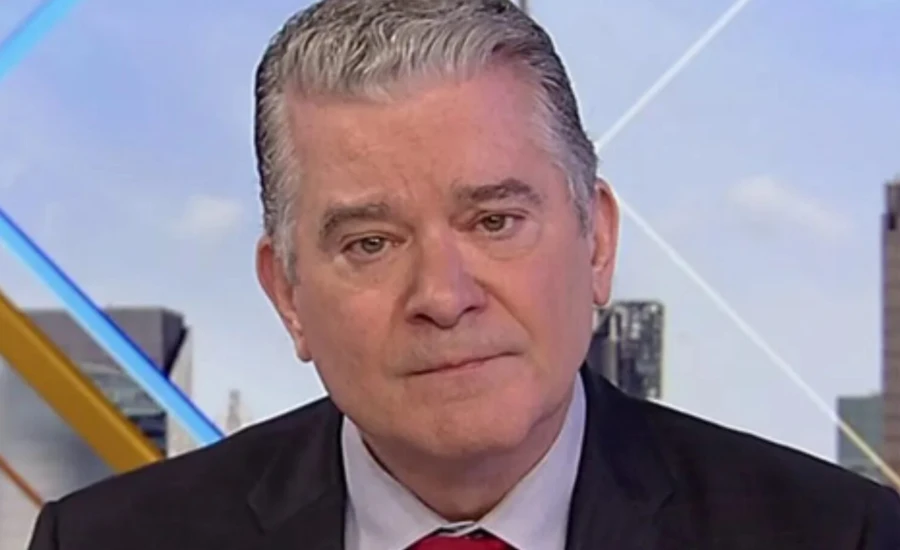
The morning of September 11, 2001 didn’t pause for anyone to prepare. Not for the city. Not for the first responders who ran toward smoke nobody yet understood. And certainly not for an NYPD inspector who had already spent fourteen years learning that New York’s worst moments demand its best people.
Paul J Mauro was at Ground Zero. That fact alone tells you something. But the fuller story — the Italian-American kid from New York City who built three careers out of one calling, who went from walking a beat to briefing Congress, who traded a badge for a law degree and then a television camera — that story is worth sitting with.
Quick Profile
| Detail | Info |
|---|---|
| Full Name | Paul J Mauro |
| Born | Circa 1965, New York City |
| Nationality | American |
| Religion | Catholic |
| Spouse | Linda Mauro |
| Children | Nicolás (son), Bianca (daughter) |
| Education | Elizabethtown University · Harvard Kennedy School (M.P.A.) · Fordham Law (J.D.) |
| NYPD Career | 1987–2010, retired as Inspector |
| Law Firm | DeMarco Law PLLC |
| Media Role | Fox News Contributor (2024–present) |
| Book | The NYPD’s War on Terror (2010) |
| Newsletter | The Ops Desk (Substack) |
| Est. Net Worth | $2–3 million (estimated, unconfirmed) |
Early Life: The City That Built Him
New York City doesn’t let you be soft. It tests you daily — with noise, with pressure, with the constant collision of cultures and histories that don’t always play nicely together. For a boy growing up in a large Italian-American Catholic household somewhere in New York’s neighborhoods around 1965, that friction wasn’t a problem to escape. It was a classroom.
Mauro came from a family where Sunday dinners meant something. Where loyalty wasn’t a word you used lightly. Faith wasn’t decorative — it was structural, woven into how decisions got made and why. His parents raised him inside a value system that placed discipline, hard work, and responsibility to something larger than yourself at its center.
Catholic school reinforced all of it. The emphasis on moral accountability, on duty, on the idea that your actions ripple outward — these weren’t abstract lessons. They shaped a young man who already seemed to know, before he had words for it, that he wanted to protect something.
He watched the police officers who worked his neighborhood. He noticed their presence. What some kids saw as authority, he saw as purpose. That distinction, quiet and early, set the direction for everything that followed.
Education: Building the Mind Before the Career
Mauro didn’t just walk into the NYPD. He spent years building an academic foundation that would eventually make him one of the most credentialed voices in American policing.
He started at Elizabethtown University in Pennsylvania, earning a bachelor’s degree with a dual focus in accounting and psychology. An unusual combination — until you understand what it produces. Accounting trains you to find the truth hiding in numbers. Psychology teaches you to read the people generating those numbers. In investigative work, that pairing is its own kind of superpower.
From there he pursued graduate studies in education. Sources differ on whether this was Kutztown University or Hofstra University — both have been cited, and this detail hasn’t been definitively confirmed publicly. Either way, the credential deepened his ability to communicate, to train others, to translate complex knowledge into something usable.
The Harvard Kennedy School of Government came next. A Master of Public Administration focused on intelligence, public safety, and policy. Harvard doesn’t hand those out for showing up.
Finally, Fordham Law School. A Juris Doctor, earned while he was still actively working one of the most demanding careers in American law enforcement. He didn’t collect degrees for display. He stacked them because each one made the next chapter possible.
Joining the NYPD: A Deliberate Beginning
In 1987, Paul J Mauro became a patrol officer with the New York Police Department. He started where every officer starts — on the street, in the neighborhood, doing the daily and often unglamorous work of keeping a city intact.
New York in the late 1980s was not a gentle place to learn policing. Crime rates were climbing. The city was under pressure from multiple directions. A young officer with Mauro’s background — the psychological insight, the attention to structure, the discipline of doing things the right way even when nobody’s watching — stood out.
He stood out long enough to rise.
The Turning Point: February 26, 1993
Most people remember September 11. Fewer remember February 26, 1993 — the day a truck bomb exploded in the parking garage beneath the World Trade Center, killing six people and wounding more than a thousand.
It was the first time many Americans confronted the reality that international terrorism wasn’t something that happened elsewhere. For the NYPD, it exposed how unprepared existing intelligence structures were for what was coming.
Mauro was part of the response. He saw the gaps. He understood, in the specific way that only someone standing inside a failing system can, that the entire approach to counterterrorism intelligence needed to be rebuilt from the ground up.
That experience didn’t break him. It focused him. Eight years later, the towers fell.
September 11, 2001: Ground Zero
There’s a version of Paul J Mauro story that could sanitize September 11 into a career milestone. That version would be dishonest.
He was deployed to Ground Zero in the hours and days after the attacks. The scene exceeded description. Colleagues were gone. The landscape of lower Manhattan had been remade into something unrecognizable. The grief was physical — it sat in the air, in the dust, in the silence between radio calls.
He focused on the mission. That’s what you do when you’re trained for crisis. But the experience transformed him, as it transformed everyone who was there.
It also transformed American policing. The NYPD undertook a wholesale reimagining of its intelligence and counterterrorism capabilities in the months and years that followed. Mauro was inside that transformation — helping to shape it, not just observe it. He’d eventually write a book about it.
Career Rise: Three Bureaus, One Mission
The arc of Mauro’s NYPD career across 23 years is, in retrospect, almost geometrically logical. Each role prepared him for the next.
He commanded the NYPD’s Legal Bureau — the unit responsible for legal guidance across the department’s operations, overseeing hundreds of attorneys and support staff. The work required him to think simultaneously as a police officer and a lawyer, long before he had the formal credential.
He served as Executive Officer of the Intelligence Operations and Analysis Bureau, one of the NYPD’s most critical units in the post-9/11 era. His reach extended far beyond New York. He briefed members of Congress on national security threats. He worked alongside the CIA, the Department of Homeland Security, Interpol, and Europol. The National Counterterrorism Center. The Department of Justice.
Earlier in his career, he’d served as a speechwriter for NYPD leadership and represented the department on a Department of Homeland Security advisory committee under President George W. Bush. Under his command, the NYPD applied New York State’s counterterrorism statutes for the first time. Cases involving RICO violations and terrorism-related money laundering moved through the legal system because of work done under his watch.
He wasn’t a bureaucrat with a badge. He was someone who kept finding harder problems and choosing to solve them.
The Book: Telling the Inside Story
In 2010, the same year he retired from the NYPD, Mauro co-authored The NYPD’s War on Terror: The True Story of the 9/11 Intelligence Revolution. It documents how New York’s police department rebuilt its intelligence capabilities after the worst terrorist attack in American history — how systems failed, what was done to fix them, and what it actually looked like to transform a massive urban police force from the inside.
For anyone serious about understanding post-9/11 policing — not the political version, not the media version, but the operational reality — the book remains relevant more than a decade later.
He also wrote a Scholastic book series for teenagers on police work. The range alone says something about who he is.
After the Badge: Law, Teaching, Writing
Retiring in 2010 after 23-plus years would have been enough for most people. Mauro wasn’t done.
He joined DeMarco Law PLLC, where he applied his Fordham J.D. to a practice focused on corporate investigations, anti-piracy work, surveillance law, and regulatory compliance. His law enforcement background made him an unusual asset in private practice — someone who understood how investigations actually work, not just how they look in legal briefs.
He became an adjunct professor at John Jay College of Criminal Justice. The master’s in education he’d earned years earlier wasn’t wasted — it turned out he could teach, and students who’d never worked a day in counterterrorism were now learning from someone who’d spent years doing exactly that.
He wrote for the New York Post. He launched The Ops Desk on Substack — detailed analysis of policing and criminal justice that goes well beyond what fits in a thirty-second television hit. In 2024, he became a contributor for Fox News Media, appearing across Fox News Channel and Fox Business Network as a legal and criminal justice analyst.
Three careers. One through-line: the belief that public safety is serious business that deserves serious thinking.
Personal Life: What the Job Didn’t Take
The details of Paul J Mauro personal life are, by his own design, not public property. He’s married to Linda. They have two children: a son named Nicolás and a daughter named Bianca. His Italian-American Catholic heritage is present not as performance but as foundation.
What isn’t fully documented: the particular weight that 9/11 carried into his household. The long hours. The impossible cases. The kind of work that doesn’t stay at the office. Law enforcement spouses hold careers together from the outside while their partners hold the city together from the inside. Linda Mauro did that for more than two decades, quietly.
His family life, by all evidence, is his anchor. The public version of Paul J Mauro — confident, analytical, steady on camera — was built by a private version that has roots.
Controversies: Where the Debates Live
Paul J Mauro hasn’t faced personal scandal. What he has attracted is the particular kind of criticism that comes to anyone who speaks plainly about law enforcement in a polarized era.
His opposition to federal intervention in local policing has drawn criticism from those who argue that external oversight is necessary — especially given documented misconduct cases in departments across the country. Critics contend that his perspective can default to institutional defense when accountability is the more appropriate posture.
His commentary on the Tyre Nichols case — the 2023 beating death of a Black man in Memphis — generated mixed reactions. Some viewers felt his analysis prioritized procedural framing at the expense of confronting the underlying brutality and systemic questions the case raised. Comments on the New Orleans jailbreak were similarly criticized for emphasizing operational failures over structural reform.
His critics call his viewpoint politically conservative. His supporters argue that his analysis reflects decades of lived experience that most commentators simply don’t have. Both things can be true. That’s usually how complicated people work.
Current Life: Still in the Room
As of 2026, Paul J Mauro is approximately 60 years old and shows no particular interest in slowing down.
He continues practicing law at DeMarco Law PLLC. He appears regularly on Fox News Channel and Fox Business Network. He writes The Ops Desk for subscribers who want more than what fits in a television segment. He teaches at John Jay College, passing along what took him decades to learn.
He still lives in New York City — the same city where he grew up, where he became a cop, where he stood in the smoke at Ground Zero, and where he shows up every day to engage with the questions that defined his career. The city didn’t make it easy. He didn’t ask it to.
Conclusion
The simplest version of Paul J Mauro legacy is resume-based: former NYPD inspector, Harvard-educated, Fordham-trained attorney, Fox News analyst, author. That credential stack is impressive. It’s also the least interesting version of what he leaves behind.
The more interesting version is about what happens when institutions need to change and someone is willing to do the work of changing them. The NYPD’s counterterrorism and intelligence capacity after September 11 is different because people like Mauro were inside the system when it failed, understood why, and spent years rebuilding it.
The next generation of law enforcement professionals coming through John Jay College will carry ideas into the field they first heard from someone who’d lived those ideas under impossible conditions. That’s how institutional knowledge actually transfers.
And the public conversation about policing — messy, contested, and necessary — benefits from voices that understand both the legal architecture and the street reality. Those voices are rare. He’s one of them.
You may be interested in Eileen Tate
FAQ
Who is Paul J. Mauro? A former NYPD inspector, attorney, author, adjunct professor, and Fox News contributor. He spent over 23 years in the NYPD — including senior roles in counterterrorism and intelligence — before transitioning to law, teaching, and media.
When did Paul J Mauro join the NYPD? In 1987, as a patrol officer. He retired in 2010 at the rank of inspector.
Was Paul J Mauro at Ground Zero on 9/11? Yes. He was deployed in the immediate aftermath and involved in intelligence coordination efforts during the response.
What book did Paul J Mauro write? He co-authored The NYPD’s War on Terror: The True Story of the 9/11 Intelligence Revolution (2010), documenting how the NYPD rebuilt its intelligence capabilities after September 11.
Where did Paul J Mauro go to school? Elizabethtown University (B.A. in accounting and psychology), graduate studies in education at either Kutztown or Hofstra University (sources conflict), Harvard Kennedy School of Government (M.P.A.), and Fordham Law School (J.D.).
Who is Paul J Mauro wife? Linda Mauro. They have two children: a son named Nicolás and a daughter named Bianca.
When did Paul Mauro join Fox News? He became a contributor in 2024, appearing on Fox News Channel and Fox Business Network.
What is The Ops Desk? His Substack newsletter, offering in-depth analysis on policing, intelligence, and criminal justice topics.
What agencies did Paul Mauro work with? The CIA, DHS, Interpol, Europol, the National Counterterrorism Center, the Department of Justice, and members of the U.S. Congress, among others.
What is Paul Mauro’s net worth? Estimated at $2–3 million across law practice, Fox News, teaching, writing, and speaking. Not officially confirmed.
What controversies has Paul Mauro been involved in? No personal scandal. Professional debate has centered on his commentary regarding federal policing oversight, the Tyre Nichols case, and the New Orleans jailbreak. Critics say his perspective leans institutional; supporters value his frontline experience.
Does Paul Mauro have a Wikipedia page? Not officially. Information is available across various news and biography sites.
Where does Paul Mauro practice law? At DeMarco Law PLLC, focusing on investigations, compliance, surveillance law, and anti-piracy work.
What is Paul Mauro’s Twitter? @PaulDMauro.