There’s a moment Partner Kristy McNichol described to People magazine that stops you cold. She’s in France, shooting a movie in 1982, and she can’t stop crying. Not movie-crying. Real crying. The kind that doesn’t stop when the director says cut. She wasn’t sleeping. She wasn’t eating. She’d wake up from nightmares just to stare at the ceiling until the cameras called again. She begged her manager to pull her from the project. He said no. So she waited until the Christmas holiday break, boarded a plane to California — and simply didn’t go back.
That one act of refusal, quiet and unglamorous, told you more about Partner Kristy McNichol than any Emmy Award ever could.
Quick Biography
| Detail | Info |
|---|---|
| Full Name | Christina Ann McNichol |
| Born | September 11, 1962, Los Angeles, California |
| Heritage | Scottish/Irish (paternal), Lebanese Christian (maternal) |
| Profession | Former actress, singer, acting teacher |
| Active Years | 1974–2001 |
| Notable Work | Family (1976–80), Little Darlings (1980), Empty Nest (1988–95) |
| Awards | Two Primetime Emmy Awards (1977, 1979); Golden Globe nomination (1982) |
| Partner | Martie Allen (together since early 1990s, public since 2012) |
| Residence | Los Angeles, California |
| Net Worth | Estimated ~$4–7 million (figures vary across sources) |
Where She Came From
Her father was a carpenter. Her mother was a registered nurse. They divorced when Kristy was three years old, and from that point on, it was just her mother, her brothers Jimmy and Tommy, and a Los Angeles apartment that didn’t have a lot of room for childhood sentiment.
Her mother Carolyn had wanted to be an actress herself. She never made it. So when her kids showed a flicker of charisma, she leaned in hard — and became their manager. Kristy shot her first commercial at six years old. She and Jimmy became a package deal in early television ads, two photogenic kids with an instinctive ease in front of the camera.
What people don’t fully grasp is how early the pressure started. This wasn’t a teenager who caught a lucky break. This was a six-year-old already learning that her job was to perform, to show up, and to make her mother proud. The roles and the responsibility arrived at exactly the same time.
Family friend Desi Arnaz helped open some early doors. Guest spots on Starsky & Hutch, The Bionic Woman, and The Love Boat — small roles, enough to build momentum. In 1974, she landed her first series regular part on the CBS drama Apple’s Way. It didn’t last long. But it was enough to get her in the room.
The Turning Point
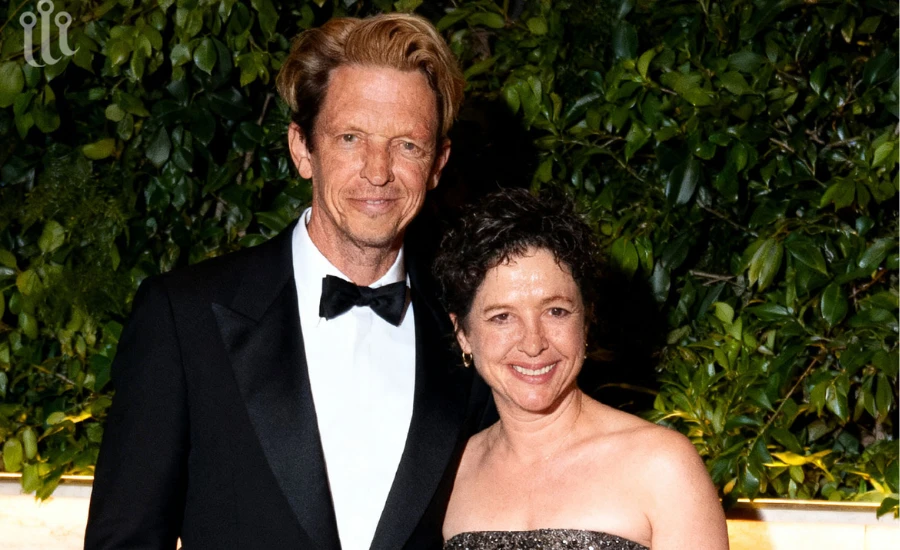
In 1976, producer Aaron Spelling cast her as Letitia “Buddy” Lawrence on Family — a drama that was, for its era, genuinely radical. This wasn’t a sitcom where problems dissolved in 22 minutes. Family tackled divorce, grief, teenage confusion, and the quiet disorder of ordinary American home life. Kristy was 14 when she walked onto that set for the first time.
She won the Emmy for Outstanding Supporting Actress in a Drama Series in 1977. Then she won it again in 1979. Two Emmys before she was old enough to vote. She became the most recognized teen actress in America — a status that sounds like a gift and functioned, increasingly, like a slow-building trap.
She was carrying adult professional weight in a young person’s body. Nobody around her seemed to notice that the math didn’t add up.
The Career in Full
By 1978, she and Jimmy had released a pop album on RCA Records, promoting it at Studio 54 alongside Brooke Shields and other celebrities of the era. Their cover of “He’s So Fine” reached number 70 on the Billboard chart — a respectable showing for two TV kids who hadn’t exactly asked to become pop stars. She appeared on The Mike Douglas Show, Dinah!, Battle of the Network Stars. The machinery of celebrity wanted more of her. She kept feeding it.
Her film career launched properly in 1978 with The End, a dark comedy alongside Burt Reynolds. Then in 1980 came the role that made her a genuine film star: Angel in Little Darlings, opposite Tatum O’Neal. Two famous young women, both from fractured homes, both carrying something heavier than the script required. The film was a real commercial hit, and Kristy’s performance — raw, unguarded, believably lost — drew serious critical praise.
In 1981, a Golden Globe nomination for Only When I Laugh, a Neil Simon film opposite Marsha Mason. Roger Ebert singled her out specifically. The industry took notice. This wasn’t a child actress coasting on goodwill; this was someone with genuine range.
Then 1982 arrived, and with it The Pirate Movie — a musical comedy disaster that earned her a Razzie nomination for Worst Actress. She had gone from Golden Globe contender to Razzie target in twelve months. That whiplash alone describes what Hollywood was doing to her.
The recovery after France took real years — not the polished comeback-narrative version. When she was ready to work again, studios had already moved on. The roles dried up. She took what she could get through the mid-1980s, appearing in Women of Valor in 1986 and two theatrical films in 1988.
Then NBC gave her a second act. In 1988, she was cast as Barbara Weston on Empty Nest, a Golden Girls spinoff. She played a single police detective living with her widowed father and her divorced sister. The show ran for seven seasons. She was genuinely good in it — physically funny, unexpectedly warm. She stayed until 1992, when the bipolar disorder made the schedule unmanageable, then returned for the final episode in 1995. Her last screen appearances were voice roles in animated series: Extreme Ghostbusters in 1997 and Invasion America in 1998.
In 2001, she formally announced her retirement. She called it “playing my biggest part — myself.” That line landed differently than it might have, because she clearly meant it.
Personal Life: The Love That Waited
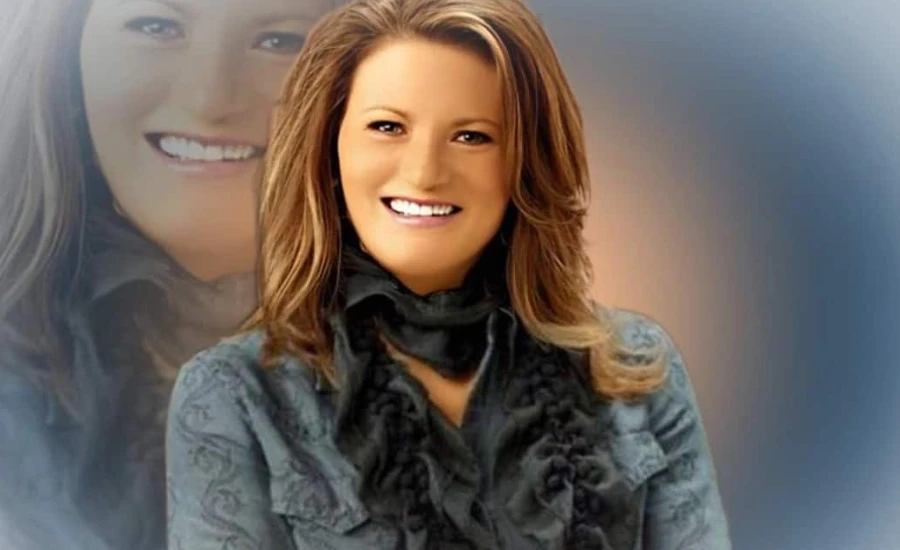
For a long time, nobody outside her closest circle knew about Martie Allen.
The two met in the early 1990s and formed a relationship that, by the time anyone outside their world knew their names together, had already lasted over twenty years. While Kristy was fighting to manage her mental health and quietly stepping back from the industry, Martie was there. Not in any headline. Not in any profile. Just steadily, privately there.
Martie Allen is not a footnote to Partner Kristy McNichol story. She’s a person with her own serious professional life. She holds a degree in Clinical Psychology from Antioch University, opened a private practice in 2003, and later worked as a Clinical Supervisor at Casa Pacifica — a community mental health organization in California — eventually becoming its Program Manager. She has done work with Aspiranet, a children and family services organization, and has additional experience as a voice actor and audiobook narrator.
This is a woman who built something real and quiet, entirely outside the spotlight her partner once inhabited.
In a 2014 interview, Kristy described her life at that point in two sentences that said everything: “My home life is happy and serene. I love singing. I also enjoy traveling and seeing the world.” She and Martie share miniature dachshunds. They play tennis together. They practice yoga. It sounds small. It sounds like everything.
The couple has no biological or adopted children, and neither maintains a social media presence. They are, by every available account, still together — and still completely uninterested in public attention.
The Controversies: What Hollywood Did, and Didn’t Do
Let’s say it plainly. In 1982, Partner Kristy McNichol had a mental health crisis on a film set in France. She was 20 years old. She’d been performing professionally for fourteen years at that point. She left because she was genuinely unwell — not sleeping, not eating, losing weight dramatically, experiencing what she’d later describe as nonstop anxiety, confusion, and crying she couldn’t control.
Her manager refused to pull her when she asked. The studio, rather than simply acknowledging that a young actress was struggling, released a statement describing her condition as a “chemical imbalance” — language carefully calibrated to imply instability while protecting the production from liability. Within days, the press was running speculation about drug addiction and alcoholism. None of it was sourced. All of it spread.
She later explained that the breakdown had two roots: the relentless pressure of a career that had begun when she was six, and the psychological cost of hiding her sexuality from an industry that would have punished her for it. She’d been carrying both burdens simultaneously since before she was a teenager. Something was going to give eventually.
The Razzie nomination for The Pirate Movie arrived the same year. The industry’s instinct, when a young woman cracked under pressure it had largely applied, was to mock her publicly. That’s the record.
When she left Empty Nest in 1992 after her bipolar diagnosis became known, the narrative around her didn’t soften. She’d been a reliable professional for nearly two decades, and the moment her health required accommodation, Hollywood wrote her off.
She didn’t argue. She didn’t hold a press conference. She just stepped away and got well.
Coming Out: The Statement That Mattered
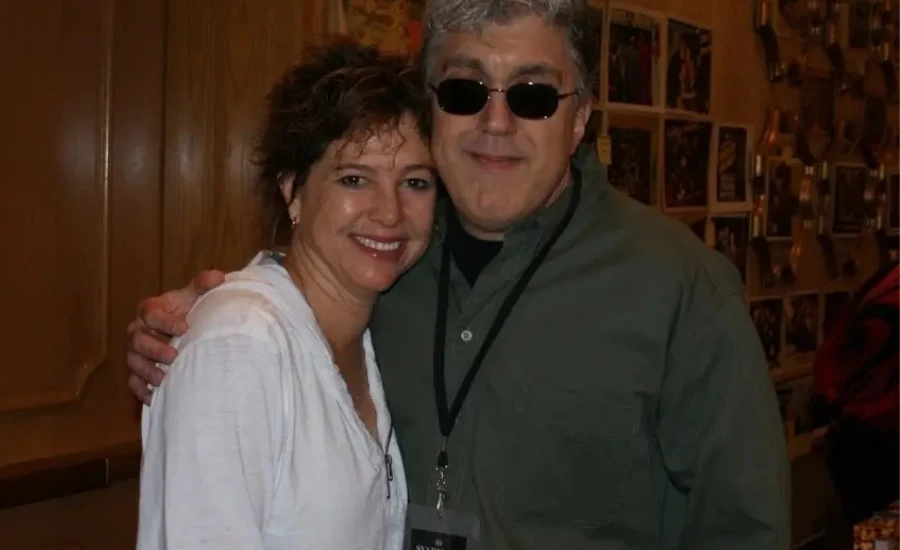
In January 2012, Kristy McNichol came out as a lesbian. She was 49. She’d been with Martie Allen for roughly two decades. She wasn’t promoting a project, rehabilitating an image, or building toward anything. She released a statement through her publicist and went back to her life.
The statement said she hoped her openness would help young people who were being bullied for their sexual orientation. Her publicist confirmed she was “very sad about kids being bullied” and wanted to help those who felt different.
That’s the whole thing. No book deal. No television special. No carefully timed exclusive. A woman who had spent thirty years fiercely guarding her privacy chose to open it up precisely because she thought it might make some teenager feel less alone somewhere.
And in the same statement, she made clear she had no plans to return to acting. This wasn’t a calculated move. She said what needed to be said and returned to her quiet life with Martie.
There is something almost radical about doing a generous thing and then disappearing before anyone can make it about you.
Where She Is Now
Partner Kristy McNichol and Martie Allen live in Los Angeles. She teaches acting at a private school. She runs the annual Kristy McNichol Celebrity Tennis Tournament, which raises funds for H.E.L.P., an organization supporting abused children in the city. She plays tennis, practices yoga, and travels with Martie when they can.
She hasn’t acted in a film or television series since 1995. She hasn’t expressed any wish to. By all available accounts, she’s well. She’s present. She has a life that belongs to her.
Martie continues her clinical and advocacy work. Together, they remain what they’ve always been to each other — consistent, private, and entirely off the grid of celebrity culture.
Some fans still hold out hope for a comeback. Partner Kristy McNichol made her position clear over two decades ago. The comeback already happened. It just wasn’t on screen.
Conclusion
Two Emmy Awards won before the age of 17. A generation of American teenagers who saw themselves in Buddy Lawrence — imperfect, emotional, real. A film performance in Little Darlings that still holds up. A second-act sitcom run that reminded people she could make you laugh without trying to.
But the legacy that lasts longest isn’t in the filmography.
She demonstrated, by example, that leaving fame isn’t the same as losing. That a diagnosis isn’t a story ending. That thirty-plus years of committed, private love with someone who never sought any spotlight is worth more than any award the industry manufactures.
She was a child star who didn’t become a cautionary tale. In Hollywood history, that’s rarer than any Emmy.
And in 2012, a 49-year-old woman with nothing left to prove chose to be publicly honest about who she was — for no personal gain, for no career reason, because she thought it might help someone who was hurting.
It did. For a lot of people, it still does.
You may be interested in Nicolas Balmaceda Pascal
FAQ
Who is Partner Kristy McNichol?
Her long-term partner is Martie Allen. They’ve been together since the early 1990s and publicly confirmed their relationship in 2012, at which point they had already been a couple for roughly twenty years.
Where is Partner Kristy McNichol now?
She lives in Los Angeles, teaches acting at a private school, and participates in charity work. She maintains a deliberately private personal life and has not acted professionally since the late 1990s.
Why did Kristy McNichol stop acting?
A combination of reasons: an emotional and mental health crisis in 1982 during filming in France, a bipolar disorder diagnosis confirmed around 1992, and a personal decision that her well-being outweighed her career. She formally retired in 2001.
Did Kristy McNichol win Emmy Awards?
Yes — two Primetime Emmys for Outstanding Supporting Actress in a Drama Series for Family, won in 1977 and 1979.
What happened to Kristy McNichol in France?
During filming of Just the Way You Are in 1982, she experienced a serious breakdown. She wasn’t sleeping, wasn’t eating, and was in a state of constant anxiety. She left during the Christmas break, flew home to California, and didn’t return. Production halted for over a year.
Who is Martie Allen?
Martie Allen is an American clinical psychologist, educator, and former television personality born on January 1, 1960. She holds a degree from Antioch University, ran a private therapy practice, and worked in community mental health at Casa Pacifica in California. She has additional experience in voice acting and audiobook narration. She is Kristy McNichol’s longtime partner.
Did Kristy McNichol have children?
No. She and Martie Allen do not have biological or adopted children.
What is Kristy McNichol’s net worth?
Estimates across various sources range from approximately $4 million to $7 million. No verified official figure exists.
Why did Kristy McNichol come out publicly in 2012?
She stated she did it to support young people being bullied over their sexual orientation — not to promote a project or reclaim a public platform. She had been with Martie Allen for nearly twenty years before making the announcement.
What charity work does Kristy McNichol do?
She hosts the annual Kristy McNichol Celebrity Tennis Tournament, which raises funds for H.E.L.P., a Los Angeles organization that supports abused children.
Did Kristy McNichol have a music career?
Yes. In 1978, she and her brother Jimmy released an album on RCA Records. Their single “He’s So Fine” — a cover of the 1963 Chiffons hit — reached number 70 on the Billboard Hot 100. She also performed on multiple television variety shows and specials throughout the late 1970s.
What were Kristy McNichol’s biggest roles?
Her most significant credits are Family (1976–80), Little Darlings (1980), Only When I Laugh (1981), and Empty Nest (1988–95). She also had notable television movie credits including Summer of My German Soldier (1978) and Women of Valor (1986).
Was Kristy McNichol ever legally married?
Based on all available public information, she has never been legally married to Martie Allen or anyone else.
What caused Kristy McNichol’s bipolar disorder diagnosis?
Bipolar disorder is not “caused” by external circumstances — it’s a clinical mental health condition. What her career stress and the pressure of hiding her sexuality did was accelerate a crisis that led to diagnosis. She was formally diagnosed around 1992.
Is Kristy McNichol still alive?
Yes. As of 2026, there is no credible information to the contrary. She is 63 years old and, by all accounts, living well in Los Angeles with Martie Allen.