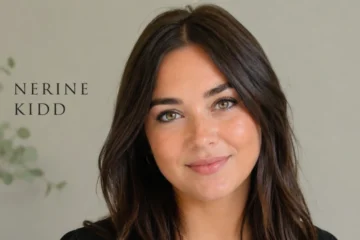
Most conservative commentators on cable news arrived there through one recognizable pipeline: campaign staffer, think tank fellow, cable news booker. Katie Zacharia took a different route. Before she ever appeared on Fox News dissecting California’s political dysfunction, she spent three years in Beijing negotiating international development contracts for the World Bank — in Mandarin-speaking boardrooms, in a country whose authoritarian system she’d later use as a contrast point in her advocacy for American constitutional freedoms.
That’s not the biography most people expect behind a California Republican strategist. It’s the one she actually has.
Quick Facts
| Detail | Information |
|---|---|
| Full Name | Katie Zacharia |
| Born | March 23, 1984, Los Angeles, California |
| Nationality | American |
| Religion | Christian |
| Education | B.A. Political Science, Pepperdine University (Seaver College), 2007; J.D., Pepperdine Caruso School of Law, 2011 |
| Husband | Tyler Zacharia (married May 2011) |
| Children | Four (three sons, one daughter) |
| Residence | Westlake Village, California |
| Occupation | Chief Advancement Officer, Fix California; Senior Advisor to Ambassador Richard Grenell; Fox News contributor; Newsmax analyst |
| Previous Roles | Federal judicial clerk (USDC Southern District of Texas); White House Office of Political Affairs; Associate, Zhong Lun Law Firm (Beijing); Nonprofit leadership; Director of Development, Pepperdine University |
| Board Positions | College Republicans of America; White Rose Resistance; Dean’s Council, Pepperdine Caruso Law; Conejo Guardian Newspaper |
| Brother | Allen (married August 2023) |
| Net Worth | Estimated $1–$2 million (unverified industry estimate) |
Early Life: The Los Angeles That Shaped Her
Los Angeles is not the natural incubator for conservative political strategists. It’s a city that breaks left at nearly every election, where Republican yard signs disappear quickly and conservative voices in professional circles often travel under the radar. Growing up there meant Katie Zacharia learned early that holding minority political views in a dominant-culture city requires something beyond belief — it requires the willingness to argue for what you believe in rooms where almost no one agrees with you.
She grew up in a middle-class household alongside her brother Allen in a family that treated Christian faith not as a Sunday routine but as an operating system for how you actually lived. That distinction matters. It’s the difference between religion as identity and religion as daily practice, and it filtered into her academic choices, her career decisions, and the causes she later chose to champion.
By high school, she’d found her arena: debate. She joined debate teams, volunteered for local political campaigns as a teenager, and moved through the Los Angeles political landscape absorbing how California machine actually worked — from the inside. She wasn’t studying it from a textbook. She was watching precincts, knocking on doors, learning what moved voters and what didn’t.
The Turning Point: Pepperdine and the Decision to Go All In

Pepperdine University sits on a cliff above Malibu, looking out over the Pacific, and it’s one of the few major universities in California with a serious conservative intellectual tradition. For Katie Zacharia, arriving there in the mid-2000s wasn’t just an educational choice — it was an alignment. She found a community that matched what she’d carried from home.
She didn’t coast through it. She served as president of both the College Republicans chapter and the Christian Legal Society — simultaneously. That’s two leadership organizations, two sets of members to manage, two agendas to execute, during an undergraduate degree in Political Science. It reflects the particular characteristic that would define every subsequent career move: she didn’t take the role unless she intended to lead it.
She also worked as a research assistant to professors Jim Gash and Roger Alford, and collaborated with Pepperdine’s then-president Andrew Benton. These weren’t resume fillers. They were real working relationships with people at the institution’s center of gravity. When she decided to stay for law school, the foundation she’d built in undergraduate years gave her a running start.
She earned her J.D. from Pepperdine’s Caruso School of Law in 2011 — clerked for a federal judge at the United States District Court for the Southern District of Texas while still in law school — and graduated with credentials that pointed in multiple directions at once: legal practice, political strategy, academic research. She chose all three. Sequentially at first. Eventually, simultaneously.
Career Rise: Three Continents and One Clear Direction
The sequence of Katie Zacharia’s career in its early years looks almost deliberately designed to acquire different kinds of authority. First the federal judicial clerkship in Texas — where she learned how courts actually function, how opinions get written, what judicial reasoning looks like from the inside. Then the White House Office of Political Affairs, where she learned how the executive branch talks to campaigns, how federal political machinery operates at its highest level. These weren’t decorative additions. They were the building blocks of someone who planned to operate across multiple domains.
Then came the genuinely unexpected move: Beijing.
From August 2011 to June 2013, she served as an associate on the international practice team at Zhong Lun Law Firm — one of China’s largest — working as outside counsel for both the World Bank and the International Finance Corporation. Simultaneously, she managed fundraising and communications for Compassion of Migrant Children, a global nonprofit focused on migrants’ educational access. She was practicing corporate law on major international development projects while running a nonprofit operation. In a country where the government controls almost every institution. In Mandarin-speaking professional environments.
That experience doesn’t just add a credential. It changes how you think. Watching authoritarian infrastructure up close, understanding how cross-border capital flows through regulatory frameworks, managing philanthropic work for vulnerable populations alongside high-stakes commercial legal work — these experiences create a specific kind of political perspective that’s hard to manufacture or approximate in domestic politics alone.
She returned to the United States with something most conservative media figures don’t have: actual familiarity with the system she argues against.
The Rise Through Conservative Networks

Back stateside, Zacharia moved into the nonprofit and higher education space. She managed the fundraising and communications operation at Compassion of Migrant Children before transitioning to serve as Director of Development at Pepperdine University — her alma mater, where her alumni relationships and institutional knowledge made her an effective fundraiser.
She joined advisory boards. The College Republicans of America, where she’d been chapter president as an undergraduate, asked her to serve on its national Board of Advisors. White Rose Resistance — a conservative advocacy group whose name draws from the German student movement that resisted Nazi authoritarianism — recruited her strategic expertise. She joined the Dean’s Council at Pepperdine Caruso Law and became associated with the Conejo Guardian Newspaper, a local California publication.
The media career accelerated alongside the advisory work. Her appearances on Fox News and Newsmax gave her the platform to translate complex legal and political issues for general audiences — which, it turned out, she was exceptionally good at. Her television commentary style is direct, legally precise without being dense, and grounded in the kind of real operational experience — courtrooms, White House offices, Beijing law firms — that most cable news guests don’t have behind them.
In 2024, she took the role of Chief Advancement Officer at Fix California, an organization dedicated to reforming California’s political direction, and became Senior Advisor to Ambassador Richard Grenell — a former Director of National Intelligence under President Trump and one of the most prominent figures in current Republican politics. She also worked on efforts for Trump’s 2024 presidential campaign in swing states. She’d reached the highest tier of operational conservative influence.
Personal Life: The Family Built in Parallel
She married Tyler Zacharia in May 2011 — the same month she earned her law degree, the same year she took the Beijing position. The timing is notable because it tells you something about how she approaches major decisions: she didn’t sequence them. She ran them concurrently.
Tyler Zacharia is not a passive figure in this equation. He holds a Bachelor of Science in Foreign Service from Georgetown University and an MBA from Pepperdine Graziadio Business School, and currently serves as Managing Director of Moriah Media Los Angeles. Their professional backgrounds complement rather than duplicate each other — law, politics, and media strategy from her side; business operations and media management from his.
Together they have four children — three sons and one daughter — living in Westlake Village, a suburban community in Ventura County that sits between Los Angeles and the Santa Barbara coastline. Family, by every available account, isn’t a secondary priority bolted onto a primary career. It functions at the center. She’s said as much publicly — her interests, in her own words, run toward “family, fitness, politics, and Southern California adventures.”
Her brother Allen, who married in August 2023, remains part of her personal world. The family’s Christian faith continues to operate as the organizing principle behind both her professional choices and her personal life structure.
Controversies: An Honest Accounting
No verified controversies, legal disputes, or documented personal scandals appear in any publicly available reporting about Katie Zacharia. This article will not manufacture complexity where the record doesn’t support it.
What does exist, honestly stated, is the political reality: she operates in a space — conservative California political advocacy, Trump administration adjacency, Fox News commentary — that generates strong reactions from the political left. Her work with Fix California places her in direct opposition to California’s Democratic establishment. Her advisory relationship with Richard Grenell, who is a polarizing figure nationally, attaches her to his controversies by association in the view of his critics.
Her California Globe columns include pieces that take clear sides on contested political questions — including pieces supportive of the Trump administration during its legal challenges. Those pieces have generated pushback from readers and commentators who disagree with her positions.
These are political disagreements, not scandals. They’re the expected friction of working as a conservative voice in an overwhelmingly left-leaning state, in a national media environment where political commentary generates strong response. They’re noted here because honesty requires acknowledging that her work isn’t without critics — and pretending otherwise would misrepresent the landscape she operates in.
Where She Is Now

As of 2025–2026, Katie Zacharia is at the most prominent point of her career to date. Her dual roles at Fix California and as advisor to Richard Grenell place her at the operational center of California Republican politics during a period of genuine uncertainty about the state’s political direction. Her regular appearances on Fox News and Newsmax, combined with her writing for California Globe, give her multiple simultaneous platforms for reaching different audiences.
She continues to serve on the boards she joined: College Republicans of America, White Rose Resistance, the Dean’s Council at Pepperdine Caruso Law. She appeared in the 2024–2025 television series Finnerty as a political consultant, and has appeared on Fox News @ Night and Rob Schmitt Tonight in 2025. The academic connection at Pepperdine remains active — her presence on the Dean’s Council keeps her connected to the institution that shaped her.
Westlake Village remains home. Four children, a media-executive husband, and a calendar packed with advisory work, television appearances, and political events. That balance — which many people who watch her on television probably don’t fully appreciate — is the context behind every public appearance.
Conclusion
Legacy is a word that belongs to finished careers. Katie Zacharia’s isn’t finished — she’s 42, at the peak of her operational influence, and actively shaping what conservative California politics looks like during one of its most contested periods.
But what her story already demonstrates, even in its current incomplete form, is a particular model for how to build genuine influence without a single defining moment. There was no viral clip that launched her. No single election win or loss that marked her career. Instead, there’s a cumulative record: federal judge, White House, Beijing, World Bank, Pepperdine, Fox News, Grenell, Fix California.
Each position built on the previous one. Each added a different kind of credibility — legal, international, institutional, media, political — to a profile that’s now genuinely difficult to categorize as any single thing. She’s a lawyer who does politics. She’s a conservative who spent years in one of the world’s most authoritarian environments. She’s a California Republican operating in a state that hasn’t elected a Republican governor since 2006. She’s a mother of four who appears on national television and advises a former Cabinet official.
The model she represents — someone who did the actual professional work before the media career, rather than media work before the professional credentials — is rarer than it looks. It’s what gives her commentary a different texture than most talking-head conservatives. The Beijing years happened. The federal courthouse years happened. The World Bank contracts were real.
Whether Fix California’s mission succeeds, whether California’s political direction shifts, whether the conservative coalition she’s part of finds broader success in the state — those outcomes are still being written. What’s already written is the record of someone who built their way to the table rather than being handed a seat at it.
You may be interested in Eileen Tate
Frequently Asked Questions About Katie Zacharia
1. Who is Katie Zacharia?
Katie Zacharia is an American conservative political strategist, legal advisor, and media commentator. She serves as Chief Advancement Officer at Fix California, Senior Advisor to Ambassador Richard Grenell, and is a regular contributor on Fox News and Newsmax.
2. When was Katie Zacharia born?
March 23, 1984, in Los Angeles, California. She turned 42 in spring 2026.
3. Where did Katie Zacharia go to school?
She attended Pepperdine University for both her undergraduate and law degrees — earning a B.A. in Political Science from Seaver College in 2007 and a J.D. from Pepperdine Caruso School of Law in 2011.
4. What did Katie Zacharia do in Beijing?
From August 2011 to June 2013, she worked as an associate on the international practice team at Zhong Lun Law Firm in Beijing, serving as outside counsel for the World Bank and the International Finance Corporation. Simultaneously, she managed fundraising and communications for Compassion of Migrant Children.
5. Who is Katie Zacharia’s husband?
Tyler Zacharia, Managing Director of Moriah Media Los Angeles. He holds a B.S.F.S. from Georgetown University and an MBA from Pepperdine Graziadio Business School. They married in May 2011.
6. How many children does Katie Zacharia have?
Four — three sons and one daughter. The family lives in Westlake Village, California.
7. What is Fix California?
Fix California is a conservative political organization focused on reforming California’s governance structure and political direction. Katie Zacharia serves as its Chief Advancement Officer, leading fundraising strategy and organizational advocacy.
8. What is Katie Zacharia’s relationship with Richard Grenell?
She serves as Senior Advisor to Ambassador Richard Grenell, a former Director of National Intelligence under President Trump and a prominent figure in current Republican politics. The advisory relationship focuses on California political strategy and conservative advocacy.
9. Did Katie Zacharia work at the White House?
Yes. She worked in the White House Office of Political Affairs, gaining operational insight into federal political processes before her Beijing posting. The precise dates of this role aren’t confirmed in public sources.
10. What is Katie Zacharia’s net worth?
Estimated at $1–$2 million based on her legal, advisory, and media work. This is an industry estimate and hasn’t been confirmed through primary financial records. Annual income from advisory roles is estimated at $100,000–$200,000, supplemented by speaking fees and television appearances.
11. What boards does Katie Zacharia serve on?
The College Republicans of America (Board of Advisors), White Rose Resistance (Board of Advisors), the Dean’s Council at Pepperdine Caruso School of Law, and the Conejo Guardian Newspaper.
12. What did Katie Zacharia do as a student at Pepperdine?
She served as president of both the College Republicans chapter and the Christian Legal Society, worked as a research assistant to professors Jim Gash and Roger Alford, and collaborated with then-university president Andrew Benton.
13. Did Katie Zacharia work as a federal judicial clerk?
Yes. During law school, she clerked for a federal judge at the United States District Court for the Southern District of Texas.
14. Is Katie Zacharia on television?
Yes. She appears regularly on Fox News and Newsmax, has been featured on Fox News @ Night and Rob Schmitt Tonight (2025), and appeared in the 2024–2025 television series Finnerty as a political consultant.
15. What is Katie Zacharia’s religion?
Christian. Her faith has been a consistent thread across her biography — from the Christian Legal Society presidency at Pepperdine to her family’s values-centered household in Westlake Village.