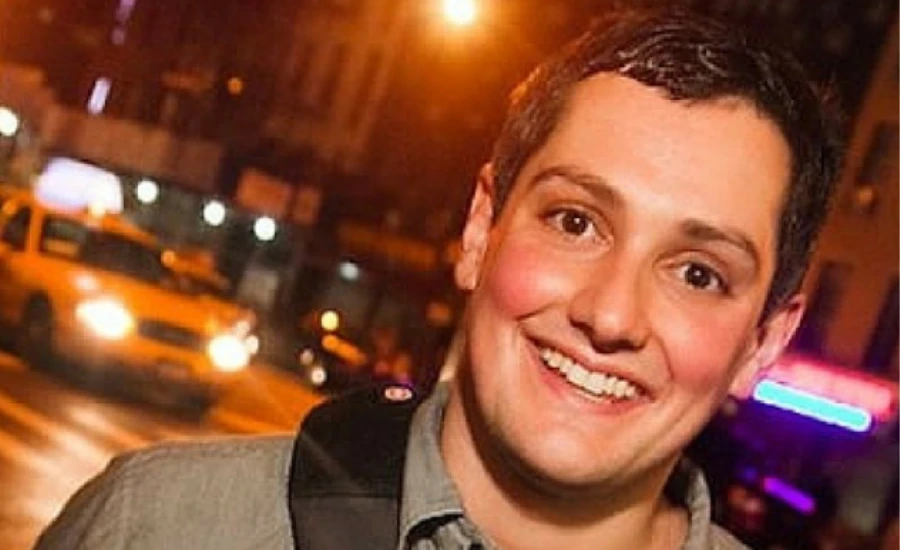
At some point in the mid-2000s, a customer service manager at a Pennsylvania supermarket decided he was done. Not dramatically — no storming out, no speech. He just quietly packed a few things, moved to New York City in 2006, and walked into one of the most unforgiving entertainment industries on the planet.
He had a high-pitched voice that made fast food cashiers call him “ma’am.” He had a nervous stage presence that audiences couldn’t quite categorize. He had spent years handing out HR forms and handling grocery complaints. And somehow, within a decade of that quiet exit, he was standing on The Tonight Show stage, making Jimmy Fallon laugh.
Joe Machi didn’t have a plan that looked like success. He just had a voice, a notebook, and the stubborn belief that the thing that made him weird might also make him funny.
Quick Facts
| Detail | Information |
| Full Name | Joseph P. Machi |
| Born | June 23, 1979 (most sources; IMDb lists June 22 — unresolved) |
| Birthplace | State College, Pennsylvania |
| Ethnicity | White / Italian descent |
| Religion | Christian |
| Height | 5’10” (178 cm) |
| Education | State College Area High School (grad. 1997); Penn State University (grad. 2002) |
| Pre-Comedy Jobs | Customer Service Manager (supermarket); Human Resources Assistant (media company) |
| NYC Move | 2006 |
| TV Debut | Late Night with Jimmy Fallon, May 2012 |
| Breakthrough | Last Comic Standing Season 8, NBC (2014) — finished 4th |
| Comedy Special | Half-hour special, Comedy Central (2016) |
| Regular TV Role | Writer and guest, Gutfeld! / Fox News |
| Podcast | Keeping Joe (with Sam Morril, weekly at Comedy Cellar) |
| Parents | Frank Machi (retired retail manager); Catherine Machi (retired Catholic school teacher) |
| Sibling | Older brother John Machi |
| Relationship Status | Not publicly confirmed; widely reported as single |
| Est. Net Worth | $1–1.5 million (estimate; sources vary widely — not officially disclosed) |
Growing Up in State College
State College, Pennsylvania is the kind of town that exists mostly because Penn State University exists. It’s a college town surrounded by central Pennsylvania farmland, where the rhythms of life run on football Saturdays and academic calendars. Joe Machi grew up there, the younger of two boys born to Frank and Catherine Machi.
Frank worked as a retail manager. Catherine taught at a Catholic school. The household was modest, grounded in working-class values and the kind of structure that produces either very obedient children or very creative ones. Joe turned out to be the second type — quietly, and without anyone around him quite realizing it yet.
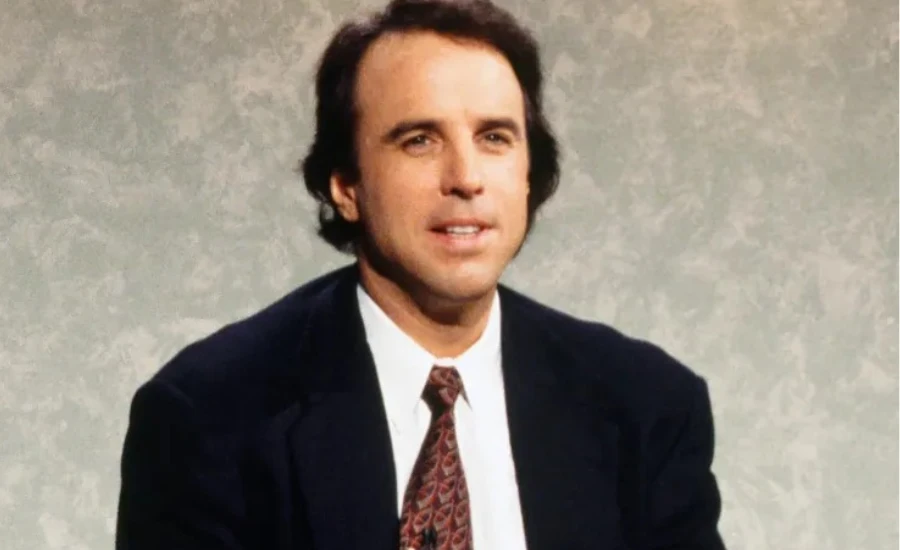
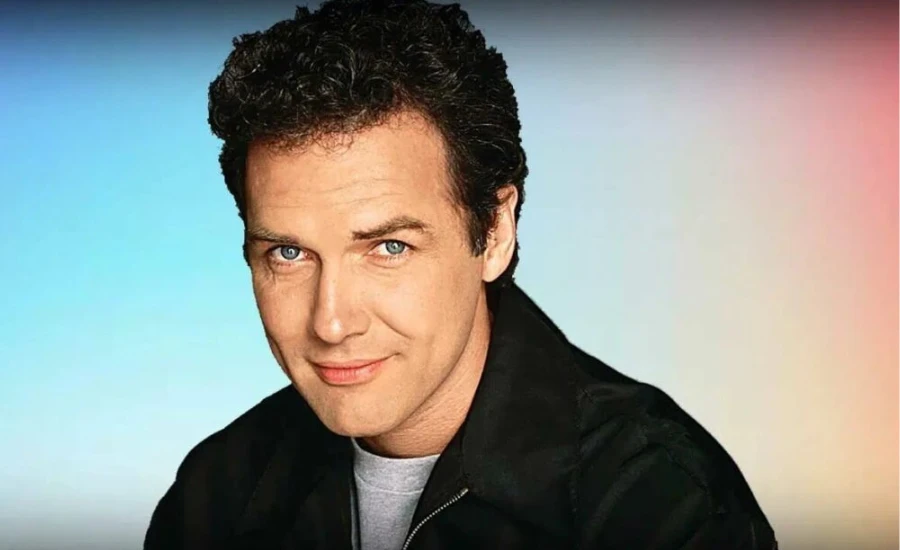
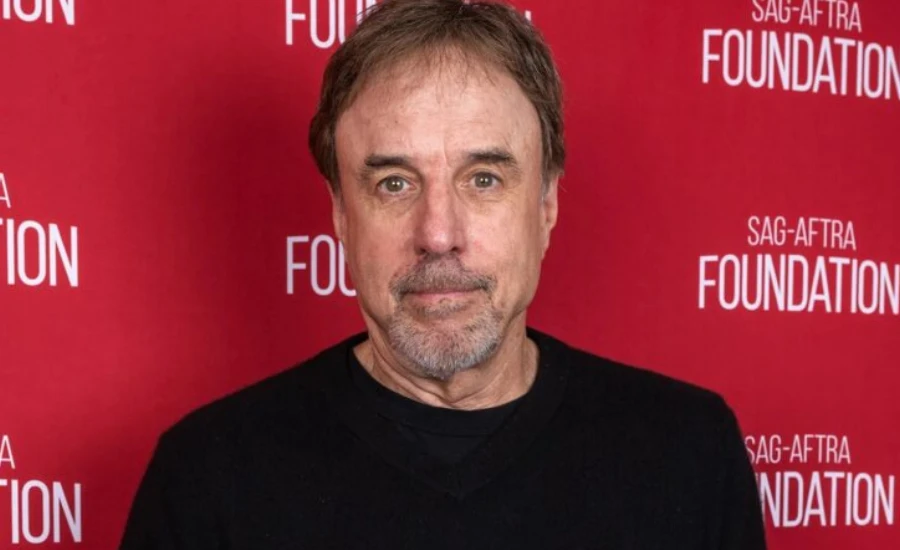
He wasn’t the class clown in the loud, disruptive sense. He was the kid who noticed things. He started watching Saturday Night Live around age twelve, drawn specifically to Kevin Nealon and Norm MacDonald — two comics who built careers on timing and subtlety rather than volume. Most twelve-year-olds were watching cartoons. He was studying comedians’ structures, even if he didn’t have the vocabulary for it yet.
He graduated from State College Area High School in 1997, then stayed local and attended Penn State University, earning his degree in 2002. His major was in media and communication — a choice that made practical sense for someone who’d been filing away mental notes about storytelling since elementary school. Penn State was five minutes from where he grew up, which meant he didn’t have to go anywhere new to figure out who he was. That part would wait until 2006.
The Turning Point: Leaving the Supermarket Behind
After graduating Penn State, Joe Machi did what a lot of graduates from small Pennsylvania towns do — he got a job and stayed put. He became a customer service manager at a local supermarket. Then he took a position as a human resources assistant at a media company. Both jobs required patience, people skills, and the ability to manage situations that nobody had specifically trained you for. He was apparently good at them. That wasn’t the problem.
The problem was that he’d been watching Norm MacDonald since he was twelve and he knew, deep down in whatever part of a person holds that particular kind of knowing, that he was supposed to be doing something else.
In 2006, he quit, packed up, and moved to New York City. He was twenty-six years old, carrying a degree in media communication and zero professional comedy credits, heading to the city where stand-up comedy’s bar for entry is simultaneously the lowest in the world — anyone can sign up for an open mic — and the highest, because the competition on any given Tuesday night at a Manhattan club is genuinely extraordinary.
He started where every comedian starts: signing up for late-night mic slots at bars and small clubs, performing for audiences that ranged from supportive to indifferent to actively hostile. He recorded his sets. He revised lines. He studied what landed and what didn’t, with the same systematic attention he’d probably brought to HR paperwork. The voice that people would later ask uncomfortable questions about — high, slightly anxious, nothing like what you’d expect from a man standing on a stage — turned out to work in his favor once he stopped fighting it.
The turning point wasn’t a single moment. It was the accumulation of all those bar shows until suddenly the clubs started saying yes.
Career Rise: From Open Mics to National Television
Joe Machi’s climb through New York’s comedy hierarchy followed a sequence that’s standard in premise but rare in execution — most people who start it don’t finish it.
After arriving in 2006, he worked his way through the city’s clubs, passing auditions at some of the most selective rooms in the business. He passed at Comic Strip Live — the Upper East Side venue that has served as a proving ground for decades of major comedians. Then Stand Up NY. Then Caroline’s on Broadway. Each “pass” meant the club would book him for paid sets, which in the economics of New York comedy is the difference between a dream and a career.
His festival trajectory gave him early credibility. In 2010, he won the New York Underground Comedy Festival’s Emerging Comics Contest. Coverage followed from outlets that mattered — The New York Times, Time Out New York, the New York Daily News, the New York Post. For a comedian who’d been a supermarket manager four years earlier, that kind of press attention was proof that something was genuinely working.
He kept winning. The 2013 New York Comedy Festival’s Funniest Comedian Competition went to him — a competition with a name so straightforward it carries real weight when you win it. That same year and in 2012, he was selected for the Just for Laughs Comedy Festival’s New Faces Unrepped Showcase and the Howie Mandel Gala in Montreal, which placed him in front of international industry eyes.
His national television debut came in May 2012 on Late Night with Jimmy Fallon — the first of multiple Fallon appearances. That set, viewed by millions, introduced his voice and his style to an audience that hadn’t encountered him in a club basement at midnight. He held the room.
Then came 2014 and Last Comic Standing Season 8 on NBC. The competition-format show had launched careers before, and Machi’s run through it ended in fourth place — which sounds like “almost” but lands differently when you consider the scale. Fourth place on a national NBC competition, broadcast to millions, with enough screen time to establish a persona that stuck. People remembered him.
The Comedy Central half-hour special arrived in 2016, giving him a permanent, promotable television credit and reaching a cable audience across the country. He followed it with appearances on Conan in 2018 and The Tonight Show Starring Jimmy Fallon in 2018 — the same show he’d debuted on six years earlier, now as a more established name. He appeared in a cameo role on Season 2 of HBO’s Crashing, the Pete Holmes comedy series. He performed on Comedy Central’s Roast Battle in 2018.
His connection to Fox News came through Greg Gutfeld. Machi became a regular on Red Eye with Greg Gutfeld, eventually transitioning into Gutfeld! where he serves as both a recurring guest and a member of the writing staff. That dual role — being funny in front of the camera and structuring jokes behind it — reflects the full range of his craft. He also appeared in This Week at the Comedy Cellar from 2018 to 2019, the Noam Dworman-created series that documented New York’s club scene at close range.
He described appearing on The Tonight Show with characteristic precision in an online post: “It’s a nice feather in your cap. It legitimizes you to other people.” Not to him — to other people. That framing says everything about where his confidence actually lives.
Personal Life: What He Keeps Off Stage
Joe Machi is, by every available account, a private person. He hasn’t publicly confirmed any romantic relationship, marriage, or partner. Multiple sources note no record of a spouse or dating history. His social media — primarily Instagram under @comedianjoemachi — focuses almost entirely on his work. He seems to prefer it that way, and he hasn’t made his privacy itself a subject of discussion.
What’s publicly known about his personal world: he lives in New York City, where he’s been since 2006. His best friend is comedian Sam Morril, and the two host a weekly podcast called Keeping Joe at the Comedy Cellar — a pairing that speaks to genuine friendship rather than professional networking. He’s an animal lover, which surfaces occasionally in posts and interviews.
His parents remain part of his story. Frank and Catherine Machi, the retail manager and the Catholic school teacher from State College, raised a son who became a nationally recognized comedian. Whether that outcome surprised them is not on record, but the grounded quality of his stage presence — the self-awareness, the refusal to perform ego — suggests he didn’t grow up in a household that encouraged pretension.
His older brother John has stayed largely out of the public record. Joe doesn’t discuss family in detail in interviews, maintaining the same quiet boundary around his private life that he draws everywhere else.
Controversies: The Voice, the Rumors, and the Routine
Joe Machi has generated two persistent areas of public speculation, and both stem from his stage presence rather than anything he actually did.
The first is his voice. High-pitched, slightly tense, nothing like what audiences typically expect from a male stand-up comedian — it prompted years of online speculation about underlying medical conditions. He doesn’t have any. He’s addressed this directly: “I have a higher-pitched voice than most men. This is a burden common to Mike Tyson and me.” The delivery is deadpan and self-aware. The voice is natural, it’s been natural since before he worked in supermarkets, and the colleague who knew him during those years confirmed he’d always been that way. He doesn’t fight the perception. He writes jokes about it and moves on.
The second area involves his sexuality. A routine about telling his parents he was gay — a prank he played on them, with the punchline being his father’s ambivalent response — generated its own speculation. He hasn’t publicly addressed his sexual orientation at length, choosing to let the work speak rather than issue clarifications. He’s reportedly straight, based on the context of the routine itself, but has kept the subject firmly in the category of things he doesn’t owe anyone a press release about. Given that his stage persona plays deliberately with discomfort and ambiguity, the speculation was probably inevitable.
What he hasn’t been is controversial in ways that actually matter. No professional disputes on record. No public feuds. No behavior that required apology. He builds jokes, he performs them, and he goes back to writing more. For a comedian who’s been working New York clubs since 2006, a clean record like that isn’t luck — it’s character.
Where He Is Now
Joe Machi is 46 years old, living in New York, still writing jokes, still touring, still appearing on Gutfeld! with enough regularity that new audiences discover him there every week. He headlines clubs and theaters across the United States. He has performed internationally, including in China. His podcast Keeping Joe with Sam Morril runs weekly from the Comedy Cellar, one of the most respected rooms in American comedy.
His Instagram following sits around 45,000. His Twitter is active. He keeps both focused on his craft rather than his personal life, which is consistent with every other aspect of how he operates.
He’s not chasing viral moments. He doesn’t need to — he’s built an audience the old way, joke by joke, show by show, over nearly two decades of professional stand-up. That audience follows him from city to city, which is the only metric in live comedy that actually counts.
The comedian who once told a drive-through cashier that his name had been called as “ma’am” — and knew better than to correct it because he’d had that conversation too many times — has turned that exact awkwardness into a national television career. He’s still that same guy. The difference is now everyone’s in on it.
Conclusion
Joe Machi’s legacy is still accumulating, which is the best possible place for a comedian in his mid-forties to be.
What’s already established: he’s proof that the features of a person most likely to be called disadvantages — an unusual voice, a nervous physical presence, a background nowhere near show business — aren’t actually obstacles if you understand what they can do. He didn’t try to sound like other comedians. He didn’t try to look like other comedians. He figured out what his specific combination of quirks could produce and spent two decades refining that production.
Fellow comedians cite his joke density and his precise word choice as craft-level achievements. Getting that kind of respect from your peers, in a profession where peers are also competition, requires something beyond ambition. It requires actual ability.
He’s also part of a tradition that New York’s comedy scene generates periodically — the comedian who builds a genuinely devoted following without becoming a celebrity in the tabloid sense. People who know comedy know his name. People who’ve seen him live remember exactly which bits they couldn’t stop laughing at. That’s a different kind of recognition than a viral clip, and in the long run, it holds better.
The kid from State College who used to watch Kevin Nealon and Norm MacDonald at age twelve wanted to make people laugh the way they did — through structure, through timing, through the precise placement of an unexpected word. He got there. He got there by scanning audience faces in bar basements at midnight for years until he understood exactly what silence meant and exactly what to do about it.
You may be interested in Clix Net Worth
Frequently Asked Questions
1. Who is Joe Machi?
Joe Machi is an American stand-up comedian, writer, and actor from State College, Pennsylvania. He’s best known for finishing fourth on NBC’s Last Comic Standing Season 8 in 2014, his Comedy Central special, and his recurring presence on Fox News’ Gutfeld! He’s been a fixture of New York’s comedy scene since 2006.
2. Where is Joe Machi from?
He was born and raised in State College, Pennsylvania — the college town that is home to Penn State University.
3. When was Joe Machi born?
Most sources list his birthday as June 23, 1979. IMDb lists June 22, 1979. The discrepancy is minor and unresolved publicly. He is 46 years old as of 2025.
4. Why does Joe Machi have a high-pitched voice?
His voice is entirely natural — it’s always been that way. He has no confirmed medical condition affecting his voice. He’s addressed it himself in his stand-up, joking that the high pitch is “a burden he and Mike Tyson share.” His former colleagues confirm he spoke the same way before he ever took the stage.
5. What shows has Joe Machi appeared on?
His television credits include Late Night with Jimmy Fallon (2012), Last Comic Standing Season 8 (2014), his Comedy Central half-hour special (2016), Conan (2018), The Tonight Show Starring Jimmy Fallon (2018), Crashing (HBO, Season 2), Roast Battle (Comedy Central, 2018), This Week at the Comedy Cellar (2018–2019), and Gutfeld! (Fox News, ongoing).
6. What place did Joe Machi finish on Last Comic Standing?
He finished fourth in Season 8 of NBC’s Last Comic Standing in 2014.
7. Is Joe Machi married?
No confirmed information about a wife, partner, or relationship exists publicly. He has consistently kept his personal life private, and no verified records of a romantic relationship have been reported.
8. What is Joe Machi’s podcast?
He co-hosts Keeping Joe with comedian Sam Morril, recorded weekly at the Comedy Cellar in New York City.
9. What did Joe Machi do before comedy?
After graduating from Penn State in 2002, he worked as a customer service manager at a supermarket and as a human resources assistant at a media company before moving to New York in 2006 to pursue stand-up full-time.
10. What is Joe Machi’s net worth?
Estimates range from approximately $1 million to $1.5 million, based on touring revenue, television appearances, and writing work. Some sources estimate higher figures, but none are officially confirmed. ESPN does not disclose talent finances — and neither does Joe Machi.
11. What comedy festivals has Joe Machi performed at?
He won the NY Underground Comedy Festival’s Emerging Comics Contest (2010), won the NY Comedy Festival’s Funniest Comedian Competition (2013), performed at Just for Laughs Montreal (New Faces Unrepped Showcase and Howie Mandel Gala, 2012), and has appeared at the Boston Comedy Festival and other major festivals.
12. Is Joe Machi gay?
He has not publicly confirmed his sexual orientation. A stand-up routine about telling his parents he was gay — framed as a prank that didn’t go the way he expected — led to online speculation. He hasn’t issued a formal statement on the subject, maintaining the same level of privacy he keeps around all aspects of his personal life.
13. Who are Joe Machi’s parents?
His father Frank Machi was a retail manager; his mother Catherine Machi was a Catholic school teacher. Both are retired. He also has an older brother named John Machi.
14. What is Joe Machi’s comedy style?
His act combines observational humor, self-deprecating awkwardness, and precise joke construction. He’s known for high joke density, careful word choice, and a delivery that uses his naturally anxious stage presence to build tension before an unexpected punchline. Fellow comedians often cite his craft as an example of disciplined stand-up writing.
15. Where can I see Joe Machi perform?
He regularly tours clubs and theaters across the United States and occasionally performs internationally. Tour dates are available on his official website joemachi.com and through his Instagram account @comedianjoemachi.