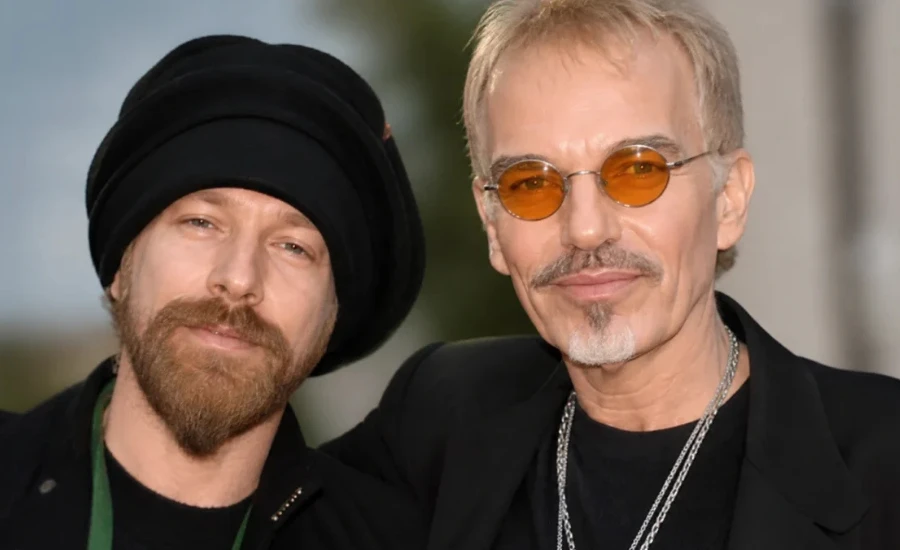
There are thirty years of interviews, Oscar speeches, and Hollywood profiles that mention Billy Bob Thornton. Very few of them spend more than a sentence on the name that shadows every single one of them: Jimmy Don.
He wasn’t an actor. He didn’t write a screenplay or win any award. He worked a line in a kitchen, played guitar when the shift ended, and wrote songs that only a handful of people ever heard — at least while he was alive. He died at thirty years old in San Francisco, on a Tuesday in October 1988, and the heart that stopped that day was the one his older brother has been trying to carry ever since.
Quick Bio
| Detail | Info |
|---|---|
| Full Name | Jimmy Don Thornton |
| Born | April 12, 1958, Mena, Arkansas |
| Died | October 3, 1988, San Francisco, California |
| Age at Death | 30 years old |
| Cause of Death | Ventricular fibrillation (sudden cardiac arrest) |
| Parents | William Raymond “Billy Ray” Thornton; Virginia Roberta Faulkner |
| Siblings | Billy Bob Thornton (older); John David Thornton (younger) |
| Occupation | Musician, songwriter, chef |
| Employer | Hard Rock Cafe, San Francisco |
| Instruments | Guitar, banjo |
| Songs Recorded Posthumously | “Emily,” “Island Avenue” — on Billy Bob’s 2003 album The Edge of the World |
| Buried | Alpine Cemetery, Alpine, Clark County, Arkansas |
Where He Came From
Mena, Arkansas sits in the foothills of the Ouachita Mountains, the kind of town where the roads thin out and the sky opens wide. Jimmy Don Thornton was born there on April 12, 1958, the second of what would eventually be three brothers. His father, William Raymond Thornton — known to everyone as Billy Ray — taught history at the local high school and coached basketball on the side. His mother, Virginia Roberta Faulkner, was a different kind of thinker entirely: she worked as a psychic, a woman tuned to something most people couldn’t name.
The family moved between small Arkansas towns as circumstances required — Alpine, Malvern, Hot Springs — never far from the red clay and pine country that defined the region. They weren’t wealthy. By some accounts the family home in their early years had neither electricity nor indoor plumbing, a fact Billy Bob Thornton has mentioned in interviews without bitterness, just as plain fact. What the house had instead was noise — conversation, storytelling, music. Three boys with different temperaments but the same bone-deep Arkansas accent.
Jimmy Don landed in the middle. Billy Bob Thornton was three years older, John David more than a decade younger. Jimmy occupied that quiet middle-child territory, and by most accounts he wore it well. He wasn’t the firstborn pushing toward the world, and he wasn’t the baby being coddled. He was something else: observant, emotionally attuned, the one who picked up a guitar and didn’t put it back down.
The Turning Point
Their father died in August 1974. Billy Ray Thornton was 44 years old. Jimmy was 16.
Nobody in the Thornton family has spoken about that loss in detail for public consumption, but the shape of what followed says enough. Billy Bob left Arkansas as soon as he could, eventually landing in Los Angeles in 1981 to chase acting. Jimmy Don didn’t leave — not right away. He stayed closer to home, closer to the music, closer to the version of himself that had formed in those Arkansas rooms.
What changed for Jimmy wasn’t a single moment but a slow migration. At some point in his twenties, he made his way to San Francisco. The city in the 1980s was a place of perpetual reinvention, loud and restless, which made it a curious destination for a man who seemed to carry a quiet interior. He found work at the Hard Rock Cafe — a restaurant concept built entirely around the mythology of rock and roll — and worked the kitchen as a chef. It was a practical life. It was also, in its own way, exactly right for someone who loved to create things with his hands.
He kept writing songs. Nobody asked him to. He just did.
The Career That Never Was — And the One That Lasted
Jimmy Don Thornton never signed with a label. He never played a headlining show, never released an album, never had his name in a newspaper outside of a birth announcement and, eventually, an obituary. By conventional measures, he didn’t have a career in music at all.
And yet two of his songs outlived him by decades and still get played today.
“Emily” and “Island Avenue” — both written by Jimmy Don before his death — sat in the Thornton family’s memory for fifteen years after he was gone. Billy Bob, by then an Academy Award-winning filmmaker and a man who had built a second life as a singer-songwriter, finally recorded them in 2003 for his second solo album, The Edge of the World, released on Sanctuary Records. The album listed the songwriting credits plainly: “Emily” by Jimmy Don Thornton. “Island Avenue” by Jimmy Don Thornton. His name, in print, on a record, fifteen years after his heart stopped.
Those who’ve heard the songs describe them as emotionally direct — the kind of writing that doesn’t announce itself but gets under your skin. Jimmy Don played guitar and banjo with what people who knew him called real skill, not hobbyist interest but genuine command of the instrument. The songwriting matched that seriousness. He wrote from somewhere specific, not from a general idea of what a song should sound like.
He never got to hear his own recordings on a finished album. That’s the part that sits hardest.
Personal Life
There are no public records of Jimmy Don Thornton ever marrying or having children. His personal life, beyond what his family has shared, remains genuinely private — not because there’s anything hidden, but because he was a private man who didn’t seek public attention and left no digital trail. Most of what we know about him comes filtered through the grief of the brother who loved him most.
What those accounts consistently describe is someone soft-spoken and emotionally generous. Not withdrawn — he worked in a busy commercial kitchen, which requires both endurance and people skills — but not loud either. He had two modes: music and cooking, and both asked the same thing of him: care, patience, precision.
His relationship with Billy Bob appears to have been the central human bond of his short life. They grew up making up songs together, telling each other stories, the particular language of brothers who learned to speak to each other before they learned how the world expected them to speak. When Billy Bob moved to Los Angeles and Jimmy Don moved to San Francisco, the physical distance didn’t close what they’d built. They remained close. They remained each other’s people.
When Billy Bob has spoken about Jimmy Don — on Oprah’s Master Class in 2014, in interviews scattered across decades — the grief doesn’t perform itself. His voice changes. His eyes change. He said once, simply, that he has never been the same since Jimmy died, and that he carries a permanent melancholy: that on any given day, at any given moment, he is fifty percent happy and fifty percent sad, and has accepted that he always will be.
That’s not a quote about a footnote. That’s a quote about someone who mattered entirely.
Controversies
There are none. This is worth stating plainly.
Jimmy Don Thornton lived a private life, held no public platform, made no enemies by name, and died at thirty without having stirred any public controversy of any kind. He was not famous enough to attract scandal and not the type of person, by all surviving accounts, to seek it.
The only friction that touched him was institutional — the question of whether a man of his talent deserved a wider hearing, whether the gatekeeping structures of the music industry left another unrecorded voice behind. That’s not a controversy involving Jimmy Don. That’s a condition of the industry he existed beside but never fully entered.
His story doesn’t have a villain. It has a clock that ran out too soon.
What October 3, 1988 Took
He was thirty years old. A Tuesday. San Francisco.
Ventricular fibrillation is a condition in which the heart’s electrical system loses its rhythm entirely — not a slow failure but a sudden one, the kind that gives no warning and allows no time. Jimmy Don had no known diagnosis, no reason to expect it. He didn’t survive long enough to understand what was happening.
His body was brought back to Arkansas, to Alpine Cemetery in Clark County — the same county where the family had roots, the same red-soil region where the Thornton boys had grown into themselves. It’s a quiet place. People who’ve visited describe it as exactly the kind of setting where a man like Jimmy Don makes sense: no fanfare, just trees and sky and the sound of something carried on the wind.
Billy Bob was thirty-two when it happened. He had not yet written Sling Blade. He had not yet won an Oscar. He was a struggling actor in Los Angeles, still years from the success that would define how the world knows him. And in one Tuesday afternoon in October, he lost the person who understood him best.
He dedicated his Oscar-winning screenplay for Sling Blade to his brother. That dedication is easy to miss if you’re watching for it in the wrong places. But it’s there.
Conclusion
Jimmy Don Thornton has been gone for thirty-six years. He has no social media presence, no streaming profile with his name at the top, no documentary about his life. What he has is two songs on a 2003 album that anyone can still listen to today — “Emily” and “Island Avenue,” under his name, on a record his brother made because he couldn’t stand to let the music disappear.
That’s a small inheritance by industry standards. It’s an enormous one by human ones.
His grandfather, Otis Thornton, was a forest ranger. His father coached basketball and taught teenagers about history. His mother read the energies of strangers. None of them are famous. All of them shaped who Jimmy Don became, and through him, indirectly shaped one of the more distinctive careers in American film. Billy Bob Thornton has said in multiple interviews that his brother’s death changed his relationship to his own work — that grief became the emotional engine underneath so much of what he creates. If that’s true, then Jimmy Don Thornton’s fingerprints are on Sling Blade, on A Simple Plan, on The Edge of the World, on every piece of work where that fifty-percent sadness is the thing making the art honest.
Most legacies are built by the person themselves. Jimmy Don’s was built by the love of someone who couldn’t stop.
He deserved to record his own album. He deserved to hear his songs coming back at him from a speaker. He deserved more Tuesdays in October. None of that happened, and it can’t be fixed now. What can be said is this: a thirty-year-old chef in San Francisco wrote songs good enough that a famous man still couldn’t let them go fifteen years after he died. That’s not nothing. That might be everything.
You may be interested in Thelma Riley
Frequently Asked Questions
Who was Jimmy Don Thornton?
Jimmy Don Thornton was an American musician, songwriter, and chef. He’s best known as the younger brother of actor and filmmaker Billy Bob Thornton. He was born April 12, 1958, in Mena, Arkansas, and died October 3, 1988, in San Francisco, California, at the age of thirty.
How did Jimmy Don Thornton die?
He died from ventricular fibrillation — a form of sudden cardiac arrest in which the heart’s electrical activity becomes erratic and fails. He had no known prior diagnosis of heart disease. His death came without warning on October 3, 1988.
How old was Jimmy Don Thornton when he died?
He was thirty years old.
Where is Jimmy Don Thornton buried?
He was laid to rest at Alpine Cemetery in Alpine, Clark County, Arkansas — returning him to the region where the Thornton family had its roots.
Did Jimmy Don Thornton ever record an album?
No. He never released or recorded a solo album during his lifetime. His songs circulated privately among family and friends.
What songs did Jimmy Don Thornton write?
He wrote multiple songs, two of which — “Emily” and “Island Avenue” — were recorded posthumously by his brother Billy Bob Thornton on the 2003 album The Edge of the World, released on Sanctuary Records.
Who were Jimmy Don Thornton’s parents? His father was William Raymond “Billy Ray” Thornton, a high school history teacher and basketball coach. His mother was Virginia Roberta Faulkner Thornton, who worked as a psychic. His father died in August 1974 at the age of 44.
Did Jimmy Don Thornton have a wife or children?
There are no public records of him having married or having children. He kept his personal life private, and no confirmed details exist on record.
What did Jimmy Don Thornton do for work?
He worked as a chef at the Hard Rock Cafe in San Francisco, California, during the 1980s. He was also a guitarist and banjo player who continued writing original songs throughout his adult life.
How did Jimmy Don’s death affect Billy Bob Thornton?
Profoundly and permanently. Billy Bob has spoken in multiple interviews about never fully recovering from the loss. In a 2014 appearance on Oprah’s Master Class, he described carrying a permanent melancholy — that he exists in a constant state of being half happy and half sad. He dedicated his Sling Blade screenplay to Jimmy Don and named his son William Robert Thornton partially in his brother’s honor.
Did Billy Bob Thornton dedicate anything to Jimmy Don?
Yes. He dedicated his Oscar-winning screenplay for Sling Blade (1996) to Jimmy Don. He also recorded his brother’s two songs on his 2003 solo album as a direct tribute.
What instruments did Jimmy Don Thornton play?
He was accomplished on both guitar and banjo, and was regarded by those who knew him as a genuinely skilled musician — not a hobbyist but someone with real command of his instruments.
Who are Jimmy Don Thornton’s siblings?
His older brother was Billy Bob Thornton (born August 4, 1955), the actor, filmmaker, and musician. His younger brother is John David Thornton (born 1969), who lives privately and stays out of the public eye.
Was Jimmy Don Thornton related to the Thornton acting family?
He was a blood brother to Billy Bob Thornton but not involved in the entertainment industry himself. He pursued music privately and worked in the culinary field rather than in film or television.
Why isn’t Jimmy Don Thornton more well known?
He lived entirely outside the public eye by choice, never pursued fame or commercial recording, and died young before the internet era when such personal histories became easier to trace. What’s known about him comes largely through his brother’s interviews and the posthumous recording of his songs.