Picture a family photograph taken in 1975 Santiago, Chile — a young couple, just out of university, holding a newborn they’d soon have to smuggle out of the country under a military dictatorship. They’d go to Denmark. Then Texas. Then California. They’d raise four children between two continents. Three of those children would eventually work in film and television. The fourth would go to medical school and spend his career treating children with brain disorders in a public hospital in Santiago.
That fourth child is Nicolas Balmaceda Pascal. And the only time the world paid him much attention was in April 2019, when his famous older brother opened Instagram and typed: “To punish him for being younger, smarter, and more handsome, I thought I would announce this to the world.”
Nicolas was mortified. Pedro Pascal — the Mandalorian himself — had just told millions of strangers that his little brother was getting a PhD in pediatric neurology. He’d also called him handsome. Nicolas’ Instagram, @bubilibubilibu, still sits on private, with fewer than 6,000 followers. He’s never given an interview about any of it.
That tells you almost everything about who Nicolas Balmaceda Pascal is.
Quick Bio
| Detail | Info |
|---|---|
| Full Name | Nicolás Balmaceda Pascal |
| Born | April 10, approx. 1987 — United States (likely California) |
| Nationality | American (Chilean heritage) |
| Parents | José Balmaceda Riera (fertility doctor) and Verónica Pascal Ureta (child psychologist, d. 2000) |
| Siblings | Javiera Balmaceda Pascal (older sister); Pedro Pascal (older brother); Lux Pascal (younger sister) |
| Education | Doctor of Medicine, University of Chile (2008–2015); PhD, Pediatric Neurology; Researcher, Columbia University — Dept. of Biobehavioral Sciences |
| Career | Pediatric neurologist; community health work via Salud a la Calle; researcher in neurobiology and behavioral neuroscience |
| Current Location | New York City (with frequent visits to Chile) |
| Social Media | @bubilibubilibu (Instagram, private) |
| Note | Many details remain unconfirmed — Nicolas has never publicly spoken about his life |
Born Between Two Countries
Nicolas Balmaceda Pascal arrived into a family already defined by upheaval. His parents — fertility doctor José Balmaceda Riera and child psychologist Verónica Pascal Ureta — hadn’t chosen exile, but exile had chosen them. As young liberal university students in Chile during the early 1970s, they’d been swept into the political opposition against Augusto Pinochet’s military regime. When Pinochet consolidated power in 1973, staying became dangerous.
Pedro Pascal — then just nine months old — left Santiago with his parents and older sister Javiera. They sought asylum in Denmark first. Then a job offer pulled the family to San Antonio, Texas, then eventually to Orange County, California. It was there, in the United States, that Nicolas was born — most sources place his birth around 1987, though his exact birth year has never been officially confirmed. He celebrates his birthday on April 10.
By the time Nicolas was growing up in Orange County, his older siblings Pedro and Javiera already had years of American life behind them. Nicolas grew up entirely in the U.S. environment — Spanish at home, English everywhere else, Chile a place his parents talked about with equal parts love and grief.
In 1995, when Nicolas was roughly eight years old, his parents brought him and his younger sister Lux back to Chile. José and Verónica had decided to return to South America after twenty years in the United States — reportedly connected, at least in part, to professional circumstances involving José’s fertility clinic. Pedro, by then a young adult chasing acting roles, stayed in the United States. Nicolas went back to the country his parents had once fled.
That childhood — split between a California suburb and a Chilean city, raised by a psychologist mother and a physician father, surrounded by books and science and a family that knew what it meant to lose a home — shaped Nicolas in ways still visible in the work he does today.
The Year the Family Broke Open
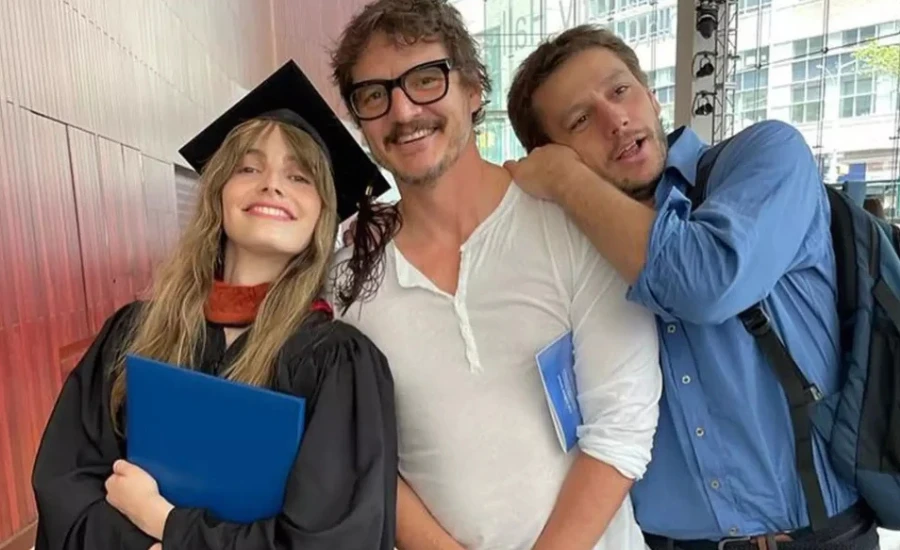
The year 2000 is the fracture point in the Balmaceda Pascal story. Verónica Pascal Ureta — the family’s anchor, the child psychologist, the refugee who’d rebuilt herself twice — died by suicide in February of that year. Pedro was 24, struggling to get acting work in Los Angeles. Nicolas was approximately thirteen, still in Chile with his mother.
Pedro said later that the circumstances of her death made it hard for the family to remember her as the person she actually was. He changed his stage name to Pedro Pascal — her maiden name — after she died. It was the clearest thing he could do to carry her forward.
What that loss meant for a teenage Nicolas, living in Chile, has never been described publicly — because Nicolas has never described it. But it’s not unreasonable to notice that in the years following his mother’s death, he pursued medicine. His mother was a child psychologist. His father, a physician. Both parents had spent their professional lives at the intersection of science and human vulnerability. Nicolas followed them there — just with a different speciality.
He chose children’s brains. Pediatric neurology: the most technically demanding, emotionally complex corner of medicine, where the patients can’t always tell you where it hurts.
The Long Road to Dr. Nicolas Balmaceda Pascal
In 2008, Nicolas enrolled at the University of Chile in Santiago — one of the most prestigious universities in Latin America. He studied medicine. Not communications, not business, not film — medicine. He stayed for seven years, earning his Doctor of Medicine degree in 2015.
Seven years of medical school is not a detour. It’s a commitment.
After his MD, he didn’t stop. He pursued a PhD in pediatric neurology — the speciality Pedro announced to the world in 2019, when Nicolas was reportedly still mid-program. Pediatric neurology sits at the edge of what medicine can do: doctors in this field treat epilepsy, brain injuries, developmental disorders, and genetic neurological conditions in patients who are often infants or young children. It demands not just clinical skill, but the ability to talk with frightened parents in the most difficult moments of their lives.
Nicolas also crossed to New York to do research. According to multiple reports, he worked at Columbia University in the Department of Biobehavioral Sciences — studying the relationship between biology and behavior, between the physical architecture of the brain and how people make decisions. His reported skills include neurobiology, neurophysiology, behavioral neuroscience, neuroeconomics, electroencephalography, and statistical data analysis. He independently studied mathematics via Coursera and picked up Python and Django via Udemy — the profile of someone who genuinely likes learning, not just credentialing.
His clinical work has reportedly included time at Hospital Santiago Oriente Dr. Luis Tisné Brousse, a public hospital. He’s also been associated with Salud a la Calle — a Chilean community health organization that brings doctors and students into underserved communities to support grassroots health awareness. It’s unglamorous, essential work. The kind that doesn’t trend.
As of 2026, Nicolas is reportedly based in New York, though he makes regular trips back to Chile. His exact current position isn’t publicly confirmed — he’s never published a professional profile or spoken to journalists about his work.
The Life He Keeps Private
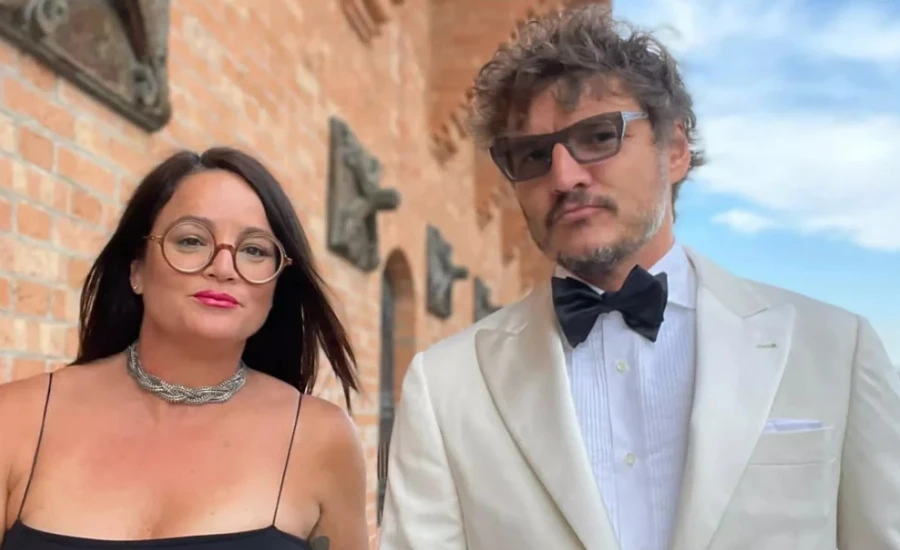
Almost nothing about Nicolas Balmaceda Pascal’s personal life has been confirmed by the man himself. His Instagram is private. His Facebook exists but reveals little. The few glimpses that have surfaced come mainly through Pedro’s social media — birthday posts, family selfies, the occasional teasing caption.
In April 2021, Pedro posted a selfie with Nicolas and older sister Javiera, casually labeling his brother “Dr. Guapo” — Doctor Handsome — in the caption. That’s the tone of their relationship: warmth expressed through mild mockery. Pedro has described all his siblings in terms of deep, uncomplicated love. Nicolas, specifically, gets described as smarter, more disciplined, and more private than Pedro could ever hope to be.
Nicolas appears to be close with his younger sister Lux Pascal, who came out as transgender in 2021. Reports suggest the siblings remained tightly bonded throughout — Lux once described her brothers as having given her the “tools” to find herself. That kind of solidarity doesn’t happen without sustained, private effort. Nicolas does that work quietly.
On his Instagram, Nicolas has reportedly posted photographs of the moon, planets, and his dog. His relationship status is unknown. Whether he’s married, partnered, or single has never been confirmed. One source claimed Pedro publicly acknowledged Nicolas is gay. This could not be independently verified and should be treated as unconfirmed — Nicolas has never spoken about his sexuality publicly.
The Fertility Clinic Controversy — And What It Had to Do With Nicolas
There’s one chapter in the Balmaceda Pascal family story that connects indirectly to Nicolas’s childhood. His father, José Balmaceda Riera, was a prominent fertility doctor who built his practice partly in the United States. In the 1990s, he became the subject of serious professional allegations — that eggs from patients had been used without their consent at his fertility clinic.
The scandal reportedly contributed to the family’s decision to leave the United States and return to Chile in 1995 — the same move that brought young Nicolas and Lux back to South America. It’s painful family history that none of the siblings have addressed publicly in any detail.
Nicolas was approximately eight years old when it happened. He’s never commented on it. By any available measure, he’s managed to remain exactly what he appears to want to be: a private person doing serious work, with no interest in settling scores through interviews.
Where Nicolas Balmaceda Pascal Is Now
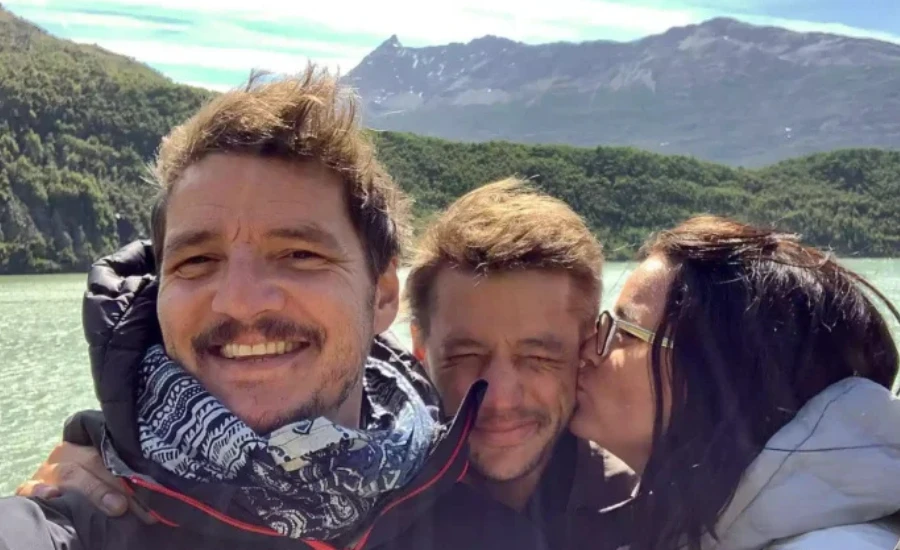
As of 2026, Nicolas Balmaceda Pascal lives in New York City, traveling frequently between there and Chile. His exact current position isn’t publicly known — his professional profiles are either private or non-existent in the public domain.
His Instagram remains locked. He didn’t appear at the Emmy Awards when Pedro was nominated. He didn’t walk any red carpets during The Last of Us premiere season, didn’t show up in the social media storm that followed Pedro’s rise to global stardom in 2022 and 2023. He sent birthday wishes to Lux on her magazine cover. He kept his head down.
The Columbia research connection and the University of Chile MD are confirmed through multiple consistent sources. The Salud a la Calle work, the Hospital Luis Tisné association, and the PhD completion — these come from secondary sources and should be treated as reported but unverified directly by Nicolas himself.
He hates attention and he loves doing good. Pedro said it in 2019. Nicolas just keeps proving it.
Conclusion
The search that brings most people to Nicolas Balmaceda Pascal starts with Pedro Pascal. Nicolas enters the frame as the brother, the footnote, the private one. That framing misses almost everything worth knowing.
Nicolas comes from a family that lost their country, rebuilt in two languages, lost their mother, and kept going. He watched his father become the subject of professional scandal. He grew up between California and Chile, carrying dual cultural identities neither of which fully claimed him. He chose, in the middle of all that, to become a doctor who specializes in children’s neurological conditions — one of the hardest, most emotionally costly subspecialties in medicine.
He didn’t do it for attention. He didn’t write a memoir about it. He didn’t turn his family’s refugee story into personal brand content. He just went to medical school. He stayed for seven years. He crossed to New York to do research. He went back to Chile to work in public hospitals and community health programs.
The Balmaceda Pascal family is remarkable because it’s so varied. Javiera runs Latin American originals for Amazon Studios. Pedro plays beloved characters on the world’s biggest screens. Lux is a Juilliard-trained actor and transgender advocate. And Nicolas diagnoses children with epilepsy and developmental disorders in a public hospital, then goes home and photographs the moon.
You may be interested in Eileen Tate
FAQ: What People Actually Search About Nicolas Balmaceda Pascal
1. Who is Nicolas Balmaceda Pascal?
He’s a Chilean-American pediatric neurologist and medical researcher — and the younger brother of actor Pedro Pascal. Born approximately in 1987 in the United States to José Balmaceda Riera and Verónica Pascal Ureta.
2. What does Nicolas Balmaceda Pascal do?
He’s a medical doctor specializing in pediatric neurology. He earned his MD at the University of Chile and reportedly pursued a PhD in the same speciality. He’s also worked as a researcher at Columbia University’s Department of Biobehavioral Sciences.
3. How old is Nicolas Balmaceda Pascal?
His exact birth year isn’t officially confirmed. Most sources estimate around 1987, which would put him at approximately 38–39 in 2026. He celebrates his birthday on April 10.
4. What did Pedro Pascal say about Nicolas?
In a 2019 Instagram birthday post, Pedro wrote: “This is my brother, Nicolas. He’s getting his PhD in pediatric neurology. He hates attention and he loves doing good. To punish him for being younger, smarter, and more handsome I thought I would announce this to the world.” In 2021, Pedro called him “Dr. Guapo” in a family selfie caption.
5. Where did Nicolas go to school?
University of Chile (2008–2015), Doctor of Medicine. He then did research at Columbia University in New York, Department of Biobehavioral Sciences. He also holds certifications in mathematics (Coursera) and Python/Django (Udemy).
6. Where did Nicolas grow up?
Born in the U.S., likely California. He grew up in Orange County, California until approximately 1995, when he returned to Chile with his parents and younger sister Lux, while Pedro stayed in the United States.
7. Is Nicolas Balmaceda Pascal married?
Unknown. He has never spoken publicly about his personal life and no verified information about a partner or spouse exists.
8. What happened to his mother? Verónica Pascal Ureta, a child psychologist, died by suicide in February 2000. She had fled Chile during the Pinochet regime, rebuilt in the United States, and later returned to Chile. Pedro changed his stage name to “Pascal” — her maiden name — in her honor.
9. What is Salud a la Calle? A Chilean community health organization that brings health professionals into underserved communities, operating from a human rights framework. Multiple sources report Nicolas worked with the organization, though he hasn’t confirmed this directly.
10. Why is Nicolas so private?
He’s never explained it — which is itself the answer. Pedro’s own line says it best: “He hates attention.” His Instagram has been private for years. He has never given a press interview.
11. Does he have social media?
Instagram: @bubilibubilibu (private, under 6,000 followers). Facebook: @nicolasbp87. He reportedly posts astronomy photos and occasional family content.
12. How is Nicolas connected to the fertility clinic controversy?
His father José Balmaceda Riera faced professional allegations in the 1990s related to his U.S. fertility clinic. The family’s 1995 return to Chile has been connected by some sources to that fallout. Nicolas was approximately eight at the time and has never commented.
13. How much younger is Nicolas than Pedro?
Approximately eleven years. Pedro was born April 2, 1975. Nicolas is estimated to have been born around 1987.
14. What ethnicity is Nicolas Balmaceda Pascal?
American nationality with Chilean heritage. The family’s ethnic roots reportedly include Chilean, Spanish, French, Welsh, Argentinian, Bolivian, Mexican, Panamanian, and Peruvian ancestry.