Gorilla Glue Net Worth. It sits beside the duct tape and the WD-40, orange label facing out, promising to bond wood to stone, metal to ceramic, almost anything to almost anything else. Nobody thinks much about how it got there. But the story behind that squat orange bottle — discovered in a workshop in Indonesia, named after an animal for sheer attitude, and eventually handed off to a Cincinnati family who turned it into a global empire — is one of the stranger entrepreneurial journeys in American business history.
This is the story of Gorilla Glue. Its net worth. Its people. And the surprising truth about who actually owns it now.
Quick Facts
| Detail | Info |
|---|---|
| Company Name | The Gorilla Glue Company |
| Founded | 1994 |
| Founder | Marc Singer |
| Headquarters | Sharonville, Ohio (suburb of Cincinnati) |
| Current Owners | The Ragland family (privately held) |
| Co-Presidents | Pete and Nick Ragland |
| Employees | 700+ |
| Est. Annual Revenue | $325.5M (per RocketReach/ZoomInfo, 2026); some market analyses suggest $500M–$700M range |
| Est. Company Valuation | $1 billion+ (estimated; not publicly confirmed) |
| Marc Singer Est. Net Worth | $300M–$500M (widely cited range; not officially confirmed) |
| Key Brands | Gorilla Glue, Gorilla Tape, O’Keeffe’s, Lutz Tool |
| Distribution | 45+ countries |
Early Life: The Man Who Started It All
Before there was a billion-dollar brand, there was a craftsman with a problem.
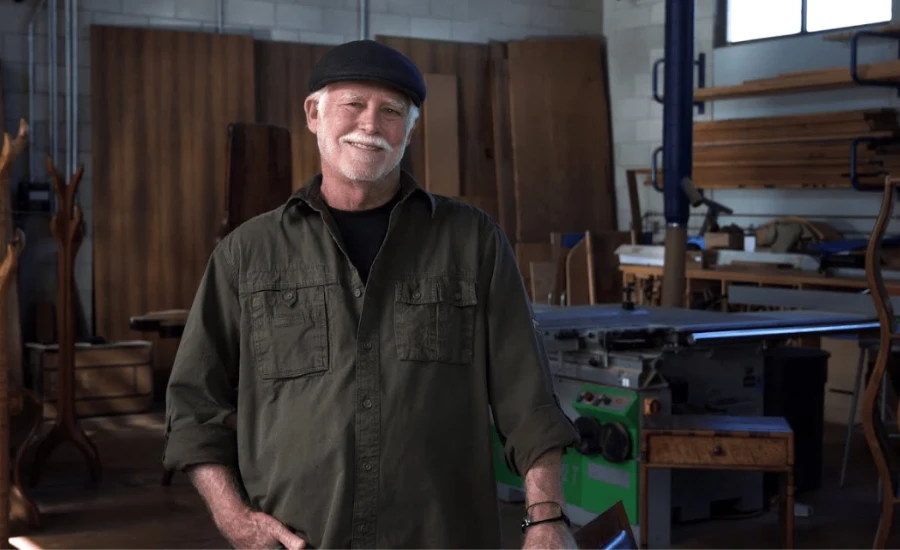
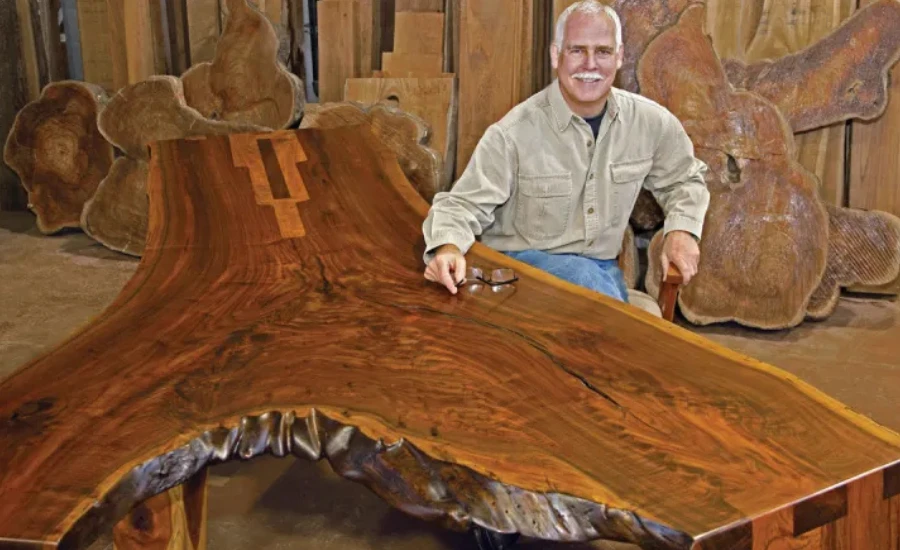
Marc Singer grew up around woodworking — his father ran a hobbyist woodshop, and Singer absorbed the language of materials, joinery, and grain at close range. He became an award-winning furniture designer, the kind whose work didn’t end up in furniture showrooms but in museums: New York’s Museum of Modern Art, the Boston Museum of Fine Arts, San Francisco’s Museum of Modern Art. That’s not a résumé most people associate with the guy who invented a tube of glue.
He founded Giati Designs in 1990, a luxury outdoor furniture company specializing in handcrafted teak pieces. Teak is notoriously difficult to bond — its natural oils repel most adhesives. Singer had tried everything on the market. Nothing held reliably. That frustration was the seed of everything that followed.
The man who would eventually be worth hundreds of millions of dollars wasn’t chasing money. He was chasing a glue that actually worked.
The Turning Point: A Workshop in Indonesia
In the early 1990s, Singer traveled to Indonesia — sourcing materials and production for his furniture business, the way high-end designers do. What he found there wasn’t on his itinerary.
In humid Indonesian workshops, craftsmen were using a Danish-made polyurethane adhesive to assemble teak furniture. It bonded differently from anything Singer had used back home. Polyurethane glue works by reacting with moisture — the humidity in the air, or the natural moisture in wood — to create a foam-like bond that expands into surfaces and holds with industrial tenacity. It bonded wood to stone. Metal to ceramic. Foam to glass. It was, by any reasonable measure, the adhesive Singer had spent years trying to find.
He didn’t walk away from the discovery. He moved fast. Singer negotiated North American distribution rights from the Danish manufacturer, brought the product back to the United States, and in 1994 launched The Gorilla Glue Company. He named it with deliberate aggression — Gorilla. Not “Super Glue Plus” or “PowerBond.” Gorilla. The name promised something.
He started selling almost exclusively to woodworkers. Professionals who understood why polyurethane mattered, who trusted a product recommendation from someone in the trade. The market was small. The word-of-mouth was not.
Career Rise: From Niche Product to National Fixture
The adhesive category in 1994 was already crowded. Elmer’s had the white-glue corner of the market. Loctite had professionals. Super Glue had its own brand loyalty. Singer entered against all of them with a product that had no American track record and a name that sounded more like a wrestling hold than a hardware store staple.
He won anyway. Because the glue worked.
By the time Singer sold the company in 1999, Gorilla Glue Net Worth had moved beyond the woodworking community and into general hardware retail. He sold to Lutz Tool Company — a hand-tool business owned by the Ragland family of Cincinnati, Ohio. Patriarch Nick Ragland Sr. had purchased Lutz in 1983 with just a handful of employees. When the Raglands bought Gorilla Glue, they recognized something Singer had already proven: American consumers didn’t just want adhesive. They wanted adhesive that felt powerful.
Critically, Singer didn’t walk away clean. He retained a significant ownership stake — a decision that would make him very wealthy as the Raglands proceeded to build something far larger than the niche Singer had launched.
The Raglands renamed the parent company The Gorilla Glue Company and moved fast. They expanded the product line beyond the original formula — Gorilla Tape, Gorilla Super Glue, Gorilla Wood Glue, Gorilla Epoxy, Gorilla Construction Adhesive. Each product carried the same aggressive branding promise. Each went into the same retail channels. Each reinforced the core identity: this stuff holds.
In 2010, the Raglands acquired O’Keeffe’s, a skincare brand founded by an Oregon pharmacist named Tara O’Keeffe who had developed a working-hands cream in her kitchen for her diabetic father. The acquisition extended the company into an adjacent space — products for people who work with their hands. The fit was logical. The distribution channels were nearly identical.
In 2016, the company relocated from its original Cincinnati address to Sharonville, a Cincinnati suburb, reflecting its growth in physical scale. By that point, Gorilla Glue had distribution across 45 countries and over 700 employees.
The Numbers: What Is Actually Gorilla Glue Net Worth?
Here’s where honesty matters, because the internet is full of confident-sounding figures that don’t always hold up.
The Gorilla Glue Company is private. It doesn’t publish revenue, profit margins, or valuation. Every number cited online is an estimate — sometimes well-researched, sometimes invented wholesale.
The most reliable third-party data point comes from business intelligence platforms including ZoomInfo and RocketReach, which place The Gorilla Glue Company’s annual revenue at approximately $325.5 million for 2026. Other market analysts — working from distribution scale, product line breadth, and comparable company transactions — estimate annual revenues in the $500M–$700M range. The discrepancy exists and should be acknowledged.
Industry valuation models, applying standard revenue multiples for a company with Gorilla Glue’s brand recognition and global reach, generally place the company’s value above $1 billion. This is an estimate. It has not been confirmed.
Mark Singer’s personal net worth sits in an equally contested range. Most serious analyses place it between $300 million and $500 million — driven primarily by his retained equity stake in the company he sold in 1999. His other ventures, including Giati Designs and EyeWris, contribute additional value but are not the core of his wealth. His exact ownership percentage has never been publicly disclosed, which makes precise calculation impossible.
What’s not in dispute: Singer made the right call keeping a stake when he sold. The Raglands took a niche California adhesive and turned it into a household name worth many times what Singer was paid for it in 1999.
Personal Life: Singer, the Craftsman Who Kept Building
Mark Singer didn’t retire when he sold Gorilla Glue. That’s not who he is.
He continued running Giati Designs, his luxury furniture company, maintaining the design and craftsmanship identity that had defined his career before polyurethane ever entered the picture. His furniture work remains museum-quality — he’s no hobbyist who stumbled into commerce. He’s an artist who happened to also be a businessman.
He married Jessica Reynolds in June 2018. His son Kenzo Singer — a Cornell-educated structural engineer who designed skyscrapers in Los Angeles before pivoting to eyewear — became his business partner in the most unexpected sequel imaginable.
Singer found himself, in his later years, constantly misplacing his reading glasses. His solution was to buy them in bulk from the dollar store and leave them everywhere. That didn’t work either. So he and Kenzo engineered a pair of reading glasses that folds around the wrist like a bracelet — available the instant you need them, impossible to misplace because you’re wearing them. They called it EyeWris. Kenzo applied his structural engineering expertise, specifically a concept called a bi-stable bridge, to create frames made from nickel-titanium memory metal that snap comfortably around the wrist and unfold to fit the face in one motion.
The company launched a GoFundMe in 2020, raising around $10,000 in eight days before the pandemic paused their progress. In a nine-month trial period in 2022, they made roughly $28,000 in sales while spending almost nothing on marketing — and turned a profit. In May 2023, Mark and Kenzo took EyeWris to the Shark Tank season 14 finale on ABC. All five Sharks made offers. The Singers negotiated a combined deal of $125,000 for 20% equity. EyeWris had also already won five international design awards and held patents in multiple countries.
The man who invented Gorilla Glue showed up on television in his seventies and got every shark in the tank to write a check.
The Raglands: The Family Running the Empire
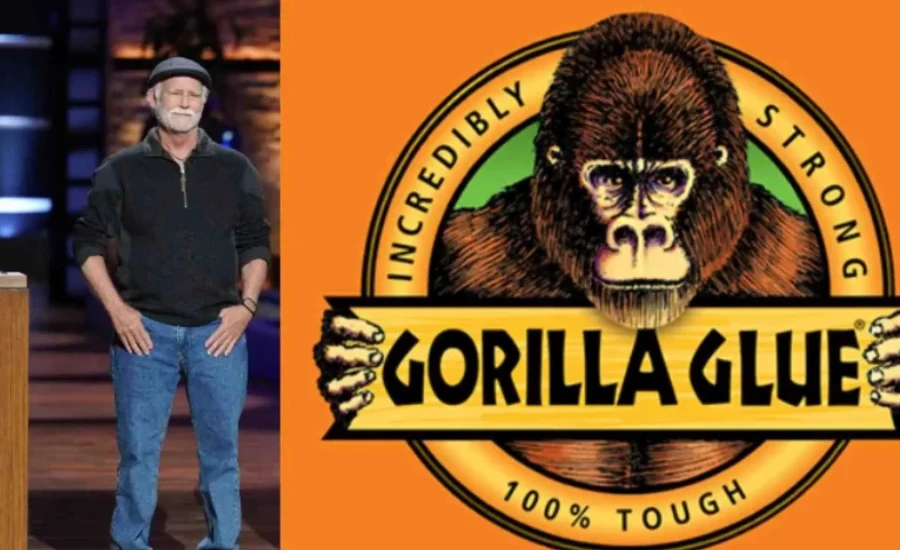
The Gorilla Glue Company’s current story belongs to the Raglands, and that story deserves its own telling.
Nick Ragland Sr. built Lutz Tool from a small hand-tool operation into a diversified manufacturing business over two decades. When his family acquired Gorilla Glue in 1999, he recognized the potential immediately. He retired from day-to-day management in 2002, passing leadership to his sons. By 2025, brothers Pete and Nick Ragland Jr. serve as co-presidents.
The family has kept the company private and local. Gorilla Glue Net Worth has been recognized as one of the top places to work in Cincinnati by the Cincinnati Enquirer for over 13 consecutive years. The Ragland family also maintains a philanthropic presence in Cincinnati’s arts community — in 2023, Marty Ragland donated a painting by celebrated artist Kehinde Wiley to the Cincinnati Art Museum.
Nick Ragland Jr. has spoken publicly about the challenges of running a family business at scale — specifically the unusual arrangement of brothers sharing the co-president title, and the looming question of how the next generation will eventually take over, given that the Ragland brothers collectively have 15 children. These aren’t small questions for a billion-dollar private company.
Controversies: The Hair Incident That Shook the Internet
In February 2021, a Louisiana woman named Tessica Brown ran out of her regular styling product — a spray called Got2b Glued — and grabbed what she thought was a reasonable substitute from her shelf: Gorilla Glue Spray Adhesive. She applied it to her hair. Her hair locked rigid. She couldn’t move it. She washed it 15 times. Nothing happened.
She documented the ordeal on TikTok. The video reached 24 million views. Social media named her “Gorilla Glue Girl.” The story went global within 48 hours.
Brown spent 22 hours in an emergency room. Acetone softened the glue temporarily before it re-hardened and burned her scalp. A Los Angeles plastic surgeon named Dr. Michael Obeng eventually performed a four-hour procedure — using medical-grade adhesive remover, aloe vera, and olive oil — that successfully freed her hair. He performed the procedure free of charge. Brown raised over $20,000 via GoFundMe for medical expenses and donated the funds to the Restore Foundation, which provides reconstructive surgery to people in need.
Gorilla Glue responded within 24 hours of the original video, expressing sympathy and clarifying that its products are “not indicated for use in or on hair” because they are considered permanent. The label on the product she used stated not to apply to eyes, skin, or clothing — hair was not specifically listed, which became a talking point.
TMZ reported Brown was considering a lawsuit. Brown publicly denied this, telling Entertainment Tonight directly: “I’ve never ever said that.” Her management company confirmed to Snopes she wasn’t suing. She did pursue separate copyright infringement claims against parties who used her voice and image without permission in remixed content.
The incident didn’t damage Gorilla Glue’s sales. It increased brand awareness — even negative attention at this scale keeps a product in front of millions of people. Saturday Night Live aired a sketch about lawyers filing a class-action suit against Gorilla Glue for people using it as a beauty product. The brand was everywhere.
Gorilla Glue didn’t create the situation. They handled the public response promptly and with sympathy. The label question — should “hair” have been listed alongside “skin” and “eyes” — remained an open discussion, though no lawsuit was ever filed against the company.
Current Life: Where the Company Stands in 2026
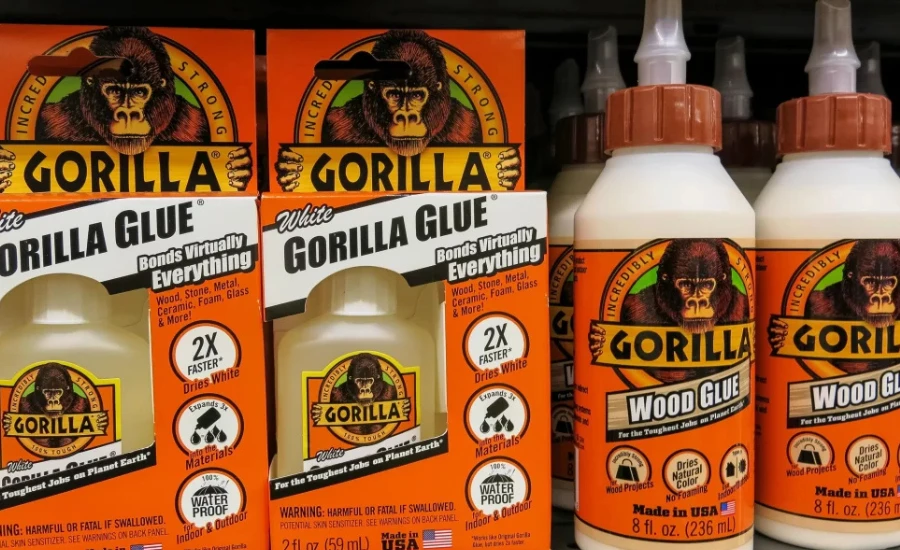
The Gorilla Glue Company operates out of Sharonville, Ohio with over 700 employees and products distributed across 45 countries. Its current CEO and President is Mark Mercurio. Pete and Nick Ragland serve as co-presidents, maintaining the family business structure their father established in 1983.
The brand family now covers Gorilla Glue, Gorilla Tape, a full line of Gorilla adhesive products, O’Keeffe’s skincare, and the Lutz Tool hand-tool line. Revenue estimates range from $325.5 million to over $500 million annually, depending on the source — and without public financial disclosure, no single figure can be confirmed.
Mark Singer lives in California, continues operating Giati Designs, and sells EyeWris reading glasses nationally. He doesn’t maintain personal social media accounts. He doesn’t seek press. He is, by most accounts, extraordinarily comfortable and deliberately quiet about it.
Conclusion
What Gorilla Glue leaves behind isn’t just shelf space in every hardware store from Maine to Montana. It’s a lesson in how a single honest product, properly named and relentlessly focused on doing one thing better than anyone else, can outlast the person who invented it and outgrow the company that carried it.
Mark Singer found something useful in Indonesia and had the instinct to bring it home. The Raglands had the operational machine to scale it. That combination — the discoverer and the builders — built something neither could have alone.
The company has produced a brand so strong that when a woman accidentally glued her hair to her head, the world’s first question was “What did you put in it?” and the second was “Can I find that on Amazon?” Brand recall at that level isn’t bought. It’s earned over decades of products that actually deliver what the label says.
For the Ragland brothers, the legacy question is live and unresolved: what does a billion-dollar private family business look like across three generations? With 15 children between the founding brothers, the answer to that question is still being written.
For Mark Singer, the legacy is already clear. He invented something in his fifties, sold it in his fifties, and was still pitching new inventions on national television well into his seventies. Some people retire. He just glued something else together.
You may be interested in Clix Net Worth
FAQ: What People Actually Search
What is Gorilla Glue Net Worth?
The Gorilla Glue Company is privately held and doesn’t publish financial statements. Industry estimates place the company’s valuation above $1 billion, with annual revenue cited at approximately $325.5 million by business intelligence platforms, and potentially $500M–$700M by broader market analyses. None of these figures have been officially confirmed.
Who founded Gorilla Glue?
Mark Singer, an award-winning furniture designer from California, founded The Gorilla Glue Company in 1994 after discovering a Danish-made polyurethane adhesive being used in Indonesian furniture workshops.
Who owns Gorilla Glue now?
The Ragland family of Cincinnati, Ohio. They acquired the company in 1999 through their existing business, Lutz Tool Company. Brothers Pete and Nick Ragland currently serve as co-presidents, with Mark Mercurio as CEO and President.
Did Mark Singer sell Gorilla Glue?
Yes, in 1999 — but he retained a significant ownership stake, meaning he continues to benefit financially from the company’s growth.
What is Mark Singer’s net worth?
Estimates range from $300 million to $500 million, depending on the source. His wealth is primarily tied to his retained equity in The Gorilla Glue Company, which is private. These are estimates, not confirmed figures.
Who is the Gorilla Glue Girl?
Tessica Brown, a Louisiana woman who in February 2021 mistakenly applied Gorilla Glue Spray Adhesive to her hair after running out of her regular styling product. Her TikTok documenting the ordeal went viral with over 24 million views.
Did Tessica Brown sue Gorilla Glue?
No. Despite widespread media reports suggesting she might, Brown publicly denied ever considering a lawsuit. Her management company confirmed to Snopes she did not sue Gorilla Glue.
What brands does The Gorilla Glue Company own?
Gorilla Glue, Gorilla Tape, O’Keeffe’s Working Hands (skincare), and the Lutz Tool line of hand tools.
When was Gorilla Glue founded?
1994, by Mark Singer, who secured North American distribution rights for a Danish polyurethane adhesive formula.
Where is Gorilla Glue headquartered?
Sharonville, Ohio — a suburb of Cincinnati. The company moved there in late 2016 from its previous Cincinnati location.
What is EyeWris and how does it relate to Gorilla Glue?
EyeWris is a wearable reading glasses company co-founded by Mark Singer (Gorilla Glue’s founder) and his son Kenzo Singer. It has no operational connection to The Gorilla Glue Company. The Singers pitched EyeWris on Shark Tank Season 14 in May 2023 and received investment from all five Sharks — $125,000 for 20% equity.
How many countries does Gorilla Glue distribute to?
Over 45 countries as of the most recent public disclosures.
Is Gorilla Glue publicly traded?
No. The Gorilla Glue Company is privately held by the Ragland family.
What adhesive technology does Gorilla Glue use?
Gorilla Glue’s original formula uses moisture-cured polyurethane, which expands as it bonds and can adhere to a wide range of materials including wood, stone, ceramic, metal, foam, and glass.